

Fertility management in vegetable farming
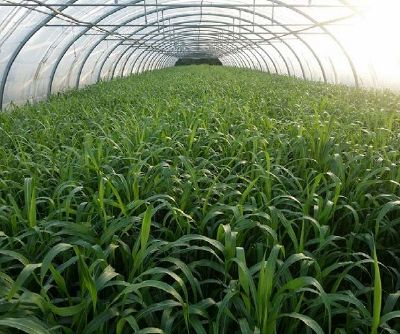 How to maintain soil fertility without inputs,...
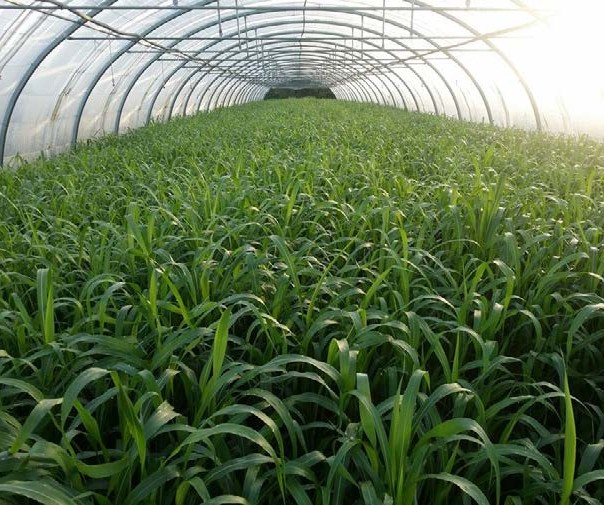
In Market Gardening on Living Soil, fertility management mainly means managing the soil's Organic Matter (OM) content as well as stimulating soil biological activity.
Managing OM content to achieve soil self-fertility
The goal is to maintain or increase the organic matter (OM) content by reintroducing carbon into the soil to reach the OM level of a well-grazed natural grassland : 4 to 5 %. Several scenarios then arise :
| OM content | Strategy |
|---|---|
| < 3 % | plan for OM inputs |
| > 3 % and < 4 % | maintain OM content |
| > 4 % | bonus |
Olivier Husson presents soil production capacity depending on OM content or carbon/clay ratio. He identifies 3.5 % OM as a threshold beyond which the soil functions in self-fertility.
Pascal Boivin, a Swiss researcher, relates soil structure to clay content and OM proportion. A threshold appears beyond which the ratio between OM and clay content is insufficient to ensure good soil porosity. The soil will not withstand weather events.
The 3 levels resulting from his research for the % clay/OM ratio are:
- Poor soil structure : < 12 %
- Marginal soil structure : = 17 %
- Good soil structure : > 24 %
Thus, with 2 % OM on a sandy soil, the soil structure can be good, whereas a soil with 20 % clay (2/20 = 10 %) will have more difficulty maintaining satisfactory porosity and structure due to lack of OM. Vegetables are not self-fertile because they are generally harvested before flowering and have not been selected to produce large biomass. A vegetable returns to the soil (residues of aerial and root systems) about 1 t DM/ha/year, which is far from the 20 t DM/ha necessary to maintain self-fertility. It is therefore often necessary to supply OM depending on available exogenous sources. For autonomy in OM, this page also covers systems without exogenous OM inputs (see chapter cover crops).
| Material | Density | Dry matter content (%) | C/N | Cost (excluding transport) in €/T | Self-fertility effect | No nitrogen hunger | Sowing | Mechanization |
|---|---|---|---|---|---|---|---|---|
| RCW | 0.3 | 60 | 50-80 | 20-40 | +++ | Spreader / Forage harvester | ||
| Straw | 0.1 (bulk) | 60 | 50-70 | 80 | ++ | Spreader / Straw blower | ||
| Hay | 0.1 (bulk) | 55 | 40-60 | 80 | ++ | Spreader / Straw blower | ||
| Chaff (flax, miscanthus, hemp, fine straw) | 0.1 (bulk) | 60 | 30-60 | 20-80 | ++ (caution, thick layer) | Spreader / Sand spreader / forage harvester | ||
| Leaves | 0.1 | 75 | 20-70 | 0 | ++ | Spreader / Straw blower / Forage harvester | ||
| Horse manure | 0.2 | 40 | 20-50 | -10 - 0 | ++ | Spreader / Straw blower | ||
| Cattle manure | 0.65 | 25 | 12-18 | 0 - 20 | Spreader / Forage harvester | |||
| Green waste chipped material | 0.4 | 50 | 15-30 | 0-20 | ++ | ++ | + | Spreader / Forage harvester |
| Alfalfa silage wrap | 0.2 | 60 | 15-30 | 80 | + | ++ | Spreader / Forage harvester | |
| Compost green waste | 0.35 | 55 | 10 | 10 - 20 | ++ | ++ | Spreader / Sand spreader / forage harvester | |
| Cattle manure compost | 0.85 | 25 | 10 | 10 - 20 | ++ | Spreader / Forage harvester | ||
| Grass clippings | 0.4 | 85 | 10-15 | 0 | ++ | Spreader / Forage harvester | ||
| Poultry manure | 0.45 | 50 | 7-10 | 0 - 20 | ++ | Spreader / Forage harvester | ||
| Slurry | 0.7 | 40 | 4-9 | 0 - 4 | ++ | Slurry tank | ||
| Organic plug | 0.75 | 90 | 4 | < 0.2 €/m² | ++ | By hand / Fertilizer spreader | ||
| Urine | 1 | 5 | 0.8 | 0 | ++ |
Carbonaceous OM type : RCW / green waste chipped material / green waste compost
There is often confusion between RCW, green waste chipped material and green waste compost. For our part, we consider RCW as wood chips (regardless of wood age or species), chipped material as a mixture of chips, leaves and grass clippings, and compost as the result, 6 months later, of chipping and watering green waste piles. Below is a series of photos of carbonaceous OM and their C/N.
-
 Wood chips or RCW (C/N 60)
 -
Dry green waste chipped material (C/N 50)
-
Green waste chipped material (C/N 30-40)
-
Mature green waste chipped material (C/N 20)
-
Green waste compost (C/N 10)

What is C/N?
The C/N ratio is an indicator that characterizes an OM. It represents the ratio between the amount of carbon and nitrogen contained in the studied OM. These are the two key elements in organic matter dynamics. The higher the C/N, the slower the biodegradation of the OM. The C/N informs us about the mineralization speed of an OM but does not tell us everything about its degradation : other indicators (chemical quality or stability index) also play a role. The C/N of soil and soil biology is around 10. The whole work of OM degradation is thus to digest the OM, break chemical bonds organizing nitrogen and carbon atoms, to lower the OM C/N to 10 : this produces humus and available minerals for plants.
- For C/N < 25 : OM degradation is fast. Mineral elements are quickly available to the plant : the balance is positive for the crop.
- For C/N > 25 : OM requires a lot of energy from soil fauna to be degraded. This energy is nitrogen. OM degradation will thus cause a temporary nitrogen immobilization : nitrogen hunger.
What is nitrogen hunger?
Although soil life is favored by OM input, bacteria and fungi responsible for its decomposition initially sequester the nitrogen present in the soil (nutrient necessary for their functioning and development). They mobilize the available nitrogen stock, to the detriment of existing plants which no longer benefit : the crops then suffer a temporary deficiency. This deficiency manifests as growth arrest of plants sometimes accompanied by yellowing of foliage. The duration of nitrogen hunger is very variable as it depends on many factors : nature of input, soil type, intensity of soil biological activity, weather conditions... However, this duration rarely exceeds 6 months (except if more than 10 cm of RCW is not incorporated into the soil).
Starting with living soil
Installation on well-structured grassland

A grassland with good spontaneous growth (see chapter Soil diagnosis) has a well-living soil with an OM content between 4 and 6 %. In this case, no need to add organic matter to the soil, which is already well supplied. Moreover, the grassland, at the time of destruction, still releases OM through decomposition of its root and aerial systems. In this situation, one can start directly cultivating some vegetables.
For this, it is first necessary to destroy the existing grass cover by occultation. One month later, planting directly into the mulch is possible to produce vegetables while weeding. Indeed, it takes 6 months of active mulching to destroy perennials of a grassland or a grassed bed but cultivation can start by planting into the mulch one month after laying it. Starting on grassland proves to be the simplest and most effective solution to start in MSV : this method avoids the need to invest initially in organic matter.
Massive input
If the soil is degraded, it is necessary to bring it back to life before starting technical itineraries. A worked soil implies a low OM content, often below 2 %. The principle of massive input is to incorporate a large amount of carbonaceous OM into the soil to raise its OM content and avoid compaction linked to loss of mechanical porosity during the transition to no-till. The goal is to supply at once the missing carbon to reach an OM content of 5 %. This involves incorporating a material with a high carbon to nitrogen ratio (C/N), such as wood chips, with quantities ranging from 50 t/ha to 400 t DM/ha depending on the initial OM content and material used.
This intervention inevitably generates nitrogen hunger. If you have time, you can let this nitrogen hunger pass without intervention : microorganisms, lacking nitrogen, will fix it from the atmosphere and you will gain a large amount of this fertilizer for free! A cover crop can help stabilize your input while waiting for nitrogen hunger to pass. If you want to start immediately after the massive input, you can offset nitrogen hunger by mixing your carbon input with nitrogenous material : grass/manures/slurries/compost. Similarly, the higher the C/N of your carbonaceous OM, the more you will need to compensate with nitrogenous OM to start quickly. And often, nitrogenous OM is not free : it is all a matter of compromise!

How to increase soil OM by 1 %?
- On 1 hectare, 30 cm depth = 4,000 t of soil
- 1 % of 4,000 t = 40 t of humus more to increase OM content by 1 %
- 40 t of humus (OM in soil) x K1 (fraction of mineralized OM) / %DM (because K1 is calculated on DM (dry matter) and we seek an amount of OM in FM (fresh matter)) = Quantity in t/FM/ha of OM to add for +1 % OM in soil
The adjacent table shows that about 5 cm of RCW is needed to gain 1 % OM, and 30 cm of straw for the same result. This difference is explained by the better mineralization efficiency of RCW (K1 of 50 VS K1 of 15 for straw) and the much lower density of straw (0.1 t/m³ VS 0.3 t/m³ for RCW) which gives it this ability to bulk (take more space).
Warning
On fragile soils, be cautious about waterlogging of organic matter in the soil. This waterlogging can create asphyxia, hydromorphy, compaction, fossilization... For example, a large OM input on a clay soil in autumn (under wet conditions) can be dangerous : the soil may fail to recover or recover poorly in spring.
Gentle revival
There is also a gentler way to bring fertility back to our soils : adding OM or OM mixtures with a C/N ratio = 20 or 30, on a previously worked soil, to feed the plant and biological activity. Example : fresh green waste chipped material, horse manure, straw-grass mix, green hay or alfalfa. Small inputs of 20 to 50 t DM/ha help avoid nitrogen hunger, provide the soil ration, and more to store OM in the soil and gradually increase your soil OM levels.
Depending on your goals and means, strategies of multiple inputs over several years can also be considered. The speed of decomposition and assimilation depends on the size of the elements and the C/N ratio of the material (see table “organic materials” : C/N)
Maintaining fertility
Successful cover crops
Soil cover is a key element in living soil market gardening. It is relevant to use cover crops, especially between crops. The main goal of these covers is to create biomass, especially root biomass, to add organic matter to the soil. A well-managed cover crop increases organic matter and carbon levels in the soil, mobilizes and limits leaching of mineral elements, limits soil erosion, competes with weed development, and finally, provides good soil structure.
Successful cover crop establishment
To establish a cover, a good seed-to-soil contact must be ensured. Sown broadcast (manually or with a lawn seed spreader), seeds must be covered, for example with compost, green waste chipped material, crop residues or straw. A horizontal axis shredder can also be used after broadcast sowing to ensure good seed-to-soil contact by lightly touching the soil. If the soil is bare with little material, a light soil scratching on the first few centimeters can be planned to ensure cover emergence. A pass with a roller after cover sowing helps press seeds to the soil and favors their germination.
Successful cover destruction

Once the cover has reached flowering, it must be flattened. For this, a Faca roller is used, which has the advantage of preventing regrowth, or a Cambridge roller, a flat roller, which works under certain conditions (cover at flowering or during frost on frost-sensitive cover). It also seems possible to use a Roll’n’Sem, still in testing phase, this tool working by ripping has shown it can destroy alfalfa in two passes. The cover can also be flattened by hand. To successfully destroy by flattening only without regrowth risk, choose one or two species maximum that reach flowering stage together. Generally, it is better to secure cover rolling by mulching for a few weeks, to avoid regrowth. On a large scale, this mulching can be replaced by thermal weeding :
although costly (90 euros per hectare), this technique, which consists of bursting cells by a flame pass, guarantees no cover regrowth. Then you can plant directly or sow in rows in the cover with a precision seeder if the seeder can reach the soil well.
Cover choice : species and density
It is important to ensure cleanliness of the cover. For this, favor high sowing densities and a multitude of species and varieties.
For further reading
For cover destruction, see the page Managing grass cover in living soil market gardening (paragraph on cover crops). More info by consulting the following documents :
- Cover crops between crops by Frédéric Thomas and Mathieu Archambeaud, 2018
- Cover crop fact sheet, Arvalis
- Magellan no-till guide
Examples of interesting cover crops
| Biomax mix | Seeding rate per species (t/ha) | Comments |
|---|---|---|
| Mustard | 2
2 20 12 |
Balanced mix with a base of classic covers combined with a pair of efficient legumes. Well suited for mid to late August sowing for an autumn and winter intercrop. For earlier sowings, the risk of mustard bolting is always to be feared, although slowed by the association. |
| Sunflower
Phacelia Pea Vetch |
6
2 2 15 10 |
More structured mix and high producer of biomass and nitrogen. It can be sown earlier, even immediately after harvesting straw. Perfectly suited between two straw harvests but can also serve as a cover for a longer intercrop. Generally, it will be quite easily destroyed by frost during winter without any intervention. |
| Radish
Phacelia Pea Vetch |
3
7 2 15 10 |
If sunflower is present in the rotation, it is possible to reinforce the radish and include flax. This cover may be slightly less productive in biomass but the structuring effect of the radish and flax combination also makes it an interesting cover. |
| Chinese radish
Phacelia Vetch or pea |
2
2 30 3 10 |
Cover with 5 layers including Chinese radish occupying the "in the soil" stratum. This biomax will be shorter with slightly less biomass than the previous ones but will be very dense, structuring with very good nitrogen fixation and a fairly rapid fertility return. This is an ideal cover between two straw harvests. |
| Oat
Fava bean Pea Vetch Phacelia |
25
50 20 15 2 |
Slightly overdosed mix intended for a winter-spring intercrop. Sown in October or November, most plants will overwinter and restart in spring. However, as most are legumes, its growth will of course consume water reserves for the following crop but will produce carbon and increase the amount of fixed nitrogen. In this type of association, classic oat can be easily replaced by strigose oat, rye or any other cereal by adjusting seeding rates. |
| Sorghum
Radish Strigose oat Pea Vetch Clover Alexandrian |
3
2 5 10 10 5 3 |
Summer forage biomax to be sown fairly early after barley or oilseed rape. The production potential is very high and the diversity of vegetation will ensure production regardless of climatic conditions. |
| Fava bean
Vetch Pea Clover Alexandrian |
30
10 15 3 5 |
Legume biomax for maximum nitrogen fixation. Over 3 to 4 months of summer and autumn intercrop, it is possible to produce 4 to 5 t of DM with 100 to 180 kg of N (in total biomass : aboveground and root) of which a good part (40 to 50%) will be returned to the following crop. |
| Sunflower
Phacelia Strigose oat Flax Pea Vetch Fava bean |
3
2 1 3 4 3 1 6 5 2 15 |
Very structured biomax with 10 species. With this type of association and if climatic conditions are favorable, aboveground biomass production can, after a straw harvest, reach or exceed 10 t DM/ha with 150 to 250 kg of N recycled and fixed in this biomass. These types of associations are real fertility boosters for soils. |
| Your own Biomax. Feel free to unleash your creativity... | Do not hesitate to send us photos of your covers with possibly measurements and analyses. Your success, observations and remarks interest us. |
Spontaneous cover
It is easier, for someone starting out or new to cover crops, to succeed with a spontaneous cover crop, that is a spontaneous grassing of weeds. This cover can be done at the garden scale or a bed. Then simply sheet the area to get rid of the weeds. These weeds have the advantage, once covered, of constituting a source of organic matter for the soil, ready to welcome a new crop. Moreover, the root system of the weeds being more interesting than that of vegetables, the soil benefits greatly.
Grassing is therefore an ally but only if well managed : it must only appear when the crop is well established so as not to compete too much. Some vegetables have less tolerance to grassing, such as leek or celery, while others thrive in it, like cabbage.

At la ferme du Château (14), Didier works with spontaneous grassing. His approach is to intervene precisely and at the right time on the spontaneous flora, in order to manage the competition it creates for the cultivated vegetables. This soil fertility strategy follows the logic that spontaneous biomass is best suited to meet the soil fertility needs which always tends to rebalance. To channel spontaneous plants, Didier has a tractor-drawn hoe/hiller that mows and incorporates the weeds into the soil. The wheel tracks are very wide to allow significant biomass as well as passage of the tractor tool. For cultivated beds, a brushcutter, as well as various manual tools like a string trimmer are used to work between and around plants with different levels of precision. Thanks to this weed management technique, la ferme du Château has had no external inputs since 1999. The two main issues induced by encouraging weeds are competition for light and competition for water : the land at la ferme du Château being humid (rainy area), the latter competition is less problematic. Regarding light, it is important to know the light requirements of different plants and thus manage the spacing necessary for the proper development of the planted crops.

Grassed pathways
Taking the idea of spontaneous cover further, one can design grassed pathway systems that generate fertility. The idea is to bury wooden boards at least 10 cm deep along the crop beds to prevent invasion of perennials (such as couch grass, bindweed or nettle) into the beds but also to avoid too strong competition between pathway and crop. Without these physical barriers, it is necessary to water and fertilize more in nitrogen, especially at system start-up. Maintenance of a grassed pathway can be done with a mower or with a brushcutter. In these cases, a strip width larger than the tool width must be planned, as the cuttings may be thrown directly onto the crop bed. In this system, one also counts on earthworms to move the organic matter created by the pathways into the crop beds.
Rotation on grassland
In conventional agriculture, crop rotation is necessary to guarantee the low soil fertility, minimize plant infection risks on an already unbalanced system, minimize weed infestation risks of crops, etc. In living soil, balanced and healthy, rotations are not always necessary, even judicious. Thus, rotation on grassland in MSV is considered in a global strategy to address main challenges encountered : presence of pests and weeds as well as good distribution of carbon inputs. What is interesting with the rotation strategy is that it can help approach autonomy in organic matter input. Whatever practices are used, a crop without sheeting is difficult to maintain for more than 2-3 years due to weed infestation. Sheeting therefore regularly returns in MSV systems : if used to destroy some weeds, it might as well be used to destroy a well-developed soil cover : a grassland.
At this point, a cruising system is reached. To summarize, rotation on grassland is an alternation of 2 years of grassland, followed by one year of crop on sheet and one year of crop under straw or direct seeding. This last crop tolerates some grassing at the end of the cycle which naturally reseeds the grassland for 2 years.

Example of rotation on grassland
Year 0 :
- Sheet 1/4 of the surface to prepare sowing and planting on mulch
- 3/4 of the grassland continues to grow.
Year 1 :
- On the 1/4 grassland sheeted in N-1 : vegetables in mulch + direct seeding/ compost
- On 1/4 of the grassland growing in N-1 : laying the sheet and planting on sheet 1 month later.
- 1/2 remains as grassland.
Year 2 :
- On 1/4 mulched crop in N-1 : let grassing occur : return to grassland
- On 1/4 crop on sheet in N-1 : vegetables in mulch + direct seeding/ compost
- On 1/4 grassland growing in N-1 : laying the sheet and planting on sheet 1 month later.
- Last 1/4 in grassland

Carbon-generating agroforestry
To meet the organic matter autonomy objective, the agroforestry option may seem relevant. By pruning hedges, one could provide part of the organic matter needed for vegetables in the form of leaves and branches. However, creating your own mulch is time-consuming and often, considering labor time, it is more economical to buy mulch than to produce it yourself. In conclusion, agroforestry can help move towards a form of organic matter autonomy, provided one is well aware of the time and cost involved, and provided mulch inputs are coupled with the use of cover crops, crop densification, etc.
Examples of agroforestry projects
Hedge shredding with tractor-mounted shredder, manually loaded
- Work rate (2 people loading) = 15 m3 fresh matter / day
- Soil ration = 1 cm of hedge mulch
- Production cost : 8h labor (15 €/h) + 300 € equipment rental + 60 € fuel = 32 €/m3
The soil ration input in mulch requires little thickness (1 cm). This thickness often being insufficient to cover the soil and limit weeds, it is common to mulch with 5 cm of mulch, even if exceeding the soil ration and applying it for several years.
Miscanthus plot harvested with forage harvester
- Work rate = 15 t/FM/ha = 100 m3 fresh matter / day
- Soil ration = 3 cm of miscanthus (=300 m3/ ha) Establishment cost : 2000 to 3500 €/ha (production from 3rd year)
- Harvest cost : 300 to 600 € / ha = 10 to 40 €/t fresh = 2 to 8 €/m3
- Required area : 4 ha (1ha = 60 m3)
Be careful not to put more than 5 cm of miscanthus as soil cover : risk of crusting (like turf) and anaerobiosis : apply miscanthus in mixture.

Mechanized hedge shredding (felling excavator, shredder, articulated arm)
- Work rate = 30 m3/hour (1 km of hedge = 100 m3 fresh matter)
- Soil ration = 1 cm (100 m3)
- It will cost about 15 to 25 €/m3.
- Required area : 7 km of hedges (pruned/shredded every 7 years as pollards) = 17 ha agroforestry with one hedge every 25 m for 1 ha of market gardening!
Be careful about the conditions of the worksite : machinery can easily compact soils, create ruts. Also, if your hedges are on the edge of market garden plots, wide turning areas must be planned for machinery passage.
Organic matter autonomy in agroforestry is costly in time or money but also in available area. Reminder : cost of organic matter at green waste platform = 0 to 20 € m3
Beware of orders of magnitude (DM produced vs needed for soil ration)
Reminder : Soil ration need = 20 t DM/ha = 100 m3 fresh matter (variable depending on moisture content and material density)
For further reading
Short rotation coppicing for heating or selling wood. Valbiom notebooks no.4, 2007 https://afac-agroforesteries.fr/wp-content/uploads/2015/02/Guide-bois-format-r%C3%A9duit.pdf
- Démarrer en maraîchage sol vivant
- Le cycle de la fertilité des sols
- Les vers de terre dans l'écosystème sol
- Diagnostic de son sol
- Stratégie de gestion de la fertilité
- Réaliser son bilan humique
- Gérer l'enherbement en maraîchage sol vivant
- Gestion des maladies et des ravageurs en maraîchage
- Conditionnement et conservation des légumes
- Commercialisation et transformation en maraîchage
- Produire ses propres semences
- L’installation en MSV
- Conversion en MSV
- Jardin amateur
- Verger maraîcher
- Avoir un atelier poules pondeuses
- Introduction aux itinéraires techniques
- Conseils de maraîchers sol vivant
- ↑ Biomax covers according to Frédéric Thomas and Mathieu Archambeaud, 2018 https://agriculture-de-conservation.com/sites/agriculture-de-conservation.com/IMG/pdf/couverts_vegetaux_2018.pdf



