
What thickness of mulching to reduce weed growth in a vegetable crop?

As part of the GIEE "Zero weeding" led by the association MSV Normandie, the effect of mulching type and its thickness on weed pressure was evaluated for different crops.
Introduction
The GIEE MSV Haute-Normandie "Conservation agriculture applied to market gardening : practices enabling zero weeding and maximizing yields" was formed following the desire of market gardeners to exchange on their practices and find solutions to manage weed growth on crop beds.
The issue for this project is to improve weed management notably through conservation agriculture practices, to reduce work hardship while maintaining the highest possible yields.
The group consists of about ten farms, all small-scale diversified market gardening.
The research question is as follows : What mulching thickness should I apply to control weeds in my crop?
Methodology
To assess weed pressure, the facilitator visited the farms in the group once a year to collect the following data on two crops :
- Type of vegetables grown.
- Type of mulch used.
- Thickness and coverage rate of the mulch.
- Weed species present on the bed.
- Coverage rate of each weed present. The value is based on Braun-Blanquet abundance-dominance coefficient.
- Frequency and duration of weeding.
- Several photos of the bed are taken.
A score from 0 to 5 is given based on the following criteria :
- A 5/5 score is given if no weeding is necessary during the crop and weed pressure remains low.
- A 4/5 score is given if weeding < 1 h per bed is necessary to keep weed pressure low.
- A 3/5 score is given if weeding > 1 h and < 2 h per bed is necessary to keep weed pressure low.
- A 2/5 score is given if weeding > 2 h and < 3 h per bed is necessary to keep weed pressure low.
- A 1/5 score is given if weeding > 3 h and < 4 h per bed is necessary to keep weed pressure low.
- A 0/5 score is given if the bed must be rototilled.
On average, one bed equals 30 m² and weeding time is calculated for one person.
- A low weed pressure corresponds to a maximum coverage rate of 5 % by weeds.
- A moderate weed pressure corresponds to a coverage rate between 5 % and 25 %.
- A high weed pressure corresponds to a coverage rate between 25 and 50 %.

Results
Garlic
- At Ferme des Gobettes, garlic is planted on woven plastic while the walkways are mulched with 3 cm of straw. A score of 5/5 is given to this mulching as there are no weeds present, soil coverage is 100%, and no weeding is needed.
- At Ferme des Annélides, the garlic is planted on bare soil after several months of tarping. 40 kg are planted on 120 m² without walkways. Then, two or three round bales of straw are spread on the plot for a thickness of about 15/20 cm. No weed pressure is observed, so a score of 5/5 is given to this mulching. Success depends on the previous tarping duration and the thickness which must be well homogeneous across the plot. If not homogeneous, "patches" can appear where thickness is lower.
- At L’Haras Tatouille, garlic is planted under greenhouse: 2 x 40 m linear beds. Beds are weeded before planting if needed (depending on previous crop). After planting, leaves or a mixture of grass clippings and leaves (about 15 cm) is used as mulch covering beds and walkways. No weeding is done during the crop. Score 5/5.
Eggplants & peppers

- On several farms, eggplants and peppers are transplanted into woven plastic, which allows no weeding since the soil is fully covered. A score of 5/5 is given to this mulching.
Here is the video produced by MSV Normandie about growing eggplant on woven plastic at Ferme du Semis Sauvage:
As well as the technical itinerary containing economic data and work times.
- At L’Haras Tatouille, eggplants are planted in May on a bed where carrots were sown in January on a RCW and grass clippings compost bed. In May, carrots start being harvested, freeing some space for eggplants. Advantage: carrots are mostly harvested without tops, which also serve as mulch for eggplants.
Weeding: At carrot sowing, weeding was done. For eggplants, a quick weeding pass may be done to remove a few thistles growing. Score 5/5.
You can find all greenhouse crop successions done at Haras'Tatouille here:
Also the technical sheet detailing the itineraries.
An eggplant bed is also installed outdoors on woven plastic. No weeding needed, score 5/5.
Artichoke
To avoid weeding, growing artichokes on woven fabric is a good lever. In areas with harsh winters, cut the plant 10 cm above soil then mulch to avoid frost damage.
Carrots
Carrots on compost
- On most farms in the MSV network, carrot sowings are done on 3 to 5 cm of green waste compost, which limits weeding time to between 45 minutes and 1 h per bed or 2h30 to weed a 100 m² block since the bed is fully covered with compost. Consequently, a score of 5/5 is given to this mulching for carrot.
- At Haras’Tatouille, carrots are sown, like most market gardeners, on green waste compost (about 6/9 cm) after tarp removal (previous crop of zucchini on plastic). Outdoors, the result is not satisfactory. Sowing lacked watering (irrigation was not installed in time). As a result, weeds took over. Moreover, it seems growing on raised beds is harder to succeed: rainwater does not soak well and the green waste compost "collapses", leaking in the beds). The crop worked much better on a flat 3-meter bed. Score 2/5 despite using green waste compost. In greenhouse, it works well thanks to good irrigation (sprinklers present).
- At Ferme des Annélides, weed pressure (between 5 and 10% of creeping potentilla, rumex and couch grass) at carrot sowing is low thanks to previous leeks, squashes and celeriacs on RCW and grass clippings followed by a 2-month tarping. A short 20 min weeding for the 300 m² block is done before compost spreading. Thus, the current mulching, compost spread 5 cm deep, limits weed growth to 1h20 weeding per 30 m² bed. A score of 4/5 is given to this itinerary. To improve chances for zero weeding, they can tarp the plot after sowing and watering heavily to limit dormancy break for 15 days. Be sure to check daily if the first carrots have emerged and remove the tarp at first emergence.
You can find sowing densities and gross margin of the itinerary here.
-
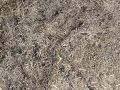 Ferme des Annélides - Before carrot sowing
 -
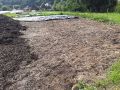 Ferme des Annélides - Before carrot sowing
 -
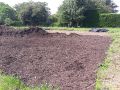 Ferme des Annélides - Before carrot sowing
 -
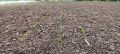 Carrots on August 6 (sown July 26)
 -
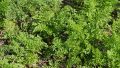 Ferme des Annélides - September 6 after 6h weeding
 -
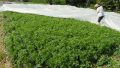 Ferme des Annélides - September 6 after 6h weeding
 -
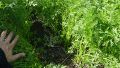 Ferme des Annélides - September 6 after 6h weeding
 -
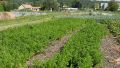 Ferme des Annélides - September 6 after 6h weeding
.jpg)
.jpg)

.jpg)
.jpg)
.jpg)
.jpg)

At Ferme des Gobettes, carrots were sown after a squash crop on plastic which strongly reduces weed pressure for the following crop. Added to this is a very high sowing density : 6 rows on a 75 cm bed, and the bed was irrigated 2h/day for 5 days allowing rapid carrot emergence. On average, 20 min weeding per bed is needed. Score 4/5 is given.
-
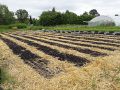 Ferme des Gobettes - June 12, 2021 - carrot sowing date
 -
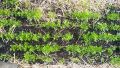 Ferme des Gobettes - Carrots - 23 days after sowing
 -
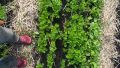 Ferme des Gobettes - Carrots - 23 days after sowing
 -
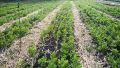 Ferme des Gobettes - Carrots - 23 days after sowing
 -
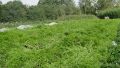 Ferme des Gobettes - Carrots on compost - September 1, 2021 - first harvest
 -
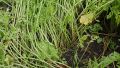 Ferme des Gobettes - Carrots on compost - September 1, 2021 - first harvest
 -
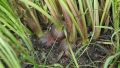 Ferme des Gobettes - Carrots on compost - September 1, 2021 - first harvest

.jpeg)
.jpeg)
.jpeg)
.JPG)
.JPG)
.JPG)
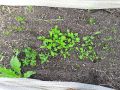
It is possible to reduce compost thickness, only if a long tarping (8 months) was done beforehand. Indeed, at La Petite Surface, a second trial was done on 1 cm of compost and 6 rows of carrots with 3 cm spacing on the row (266 seeds/m²). The bed quickly became weedy despite long tarping, and 1h40 weeding for two 16 m² beds was necessary. Score 3/5 is given.
-
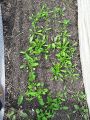 Petite Surface - June 28, 2021 carrot sowing trial on 1 cm compost
 -
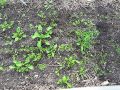 Petite Surface - June 28, 2021 carrot sowing trial on 1 cm compost
 -
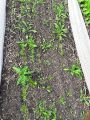 Petite Surface - June 28, 2021 carrot sowing trial on 1 cm compost
 -
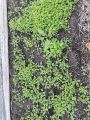 Petite Surface - June 28, 2021 carrot sowing trial on 1 cm compost
 -
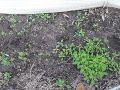 Petite Surface - June 28, 2021 carrot sowing trial on 1 cm compost
 -
 Petite Surface - June 28, 2021 carrot sowing trial on 1 cm compost
 -
 Petite Surface - June 28, 2021 carrot sowing trial on 1 cm compost
.jpg)
.jpg)
.jpg)
.jpg)
.jpg)
.jpg)
.jpg)
You can find the ITK Carrot at La Petite Surface by clicking here.
- At Ferme du Bois Rosé, the previous squash on compost, then woven plastic tarp for 6 months allowed zero weed pressure before preparation. Carrot sowing was done early March on 3 cm of compost with 4 rows per bed. There was a first weeding early April with 1 person then a second weeding early May with 2 people and finally a weeding late June with 2 people. Total weeding time is 12 hours for a 120 m² block, corresponding to 1 h for a 10 m² bed. Score 2/5 is given to this itinerary.
-
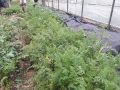 Bois Rosé - August 19 - carrots
 -
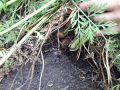 Bois Rosé - August 19 - carrots
.jpg)
.jpg)
If you start on a meadow, it is possible to kill it by spreading at least 15 cm of green waste compost. However, meadow regrowth occurs 2 months after spreading. Daily irrigation is needed to get dense emergence because compost dries and there is a risk of being overtaken by weeds. This test itinerary was implemented at Ferme du Semis Sauvage which is overall satisfied as no weeding was necessary.
You can find all technical itineraries of the GIEE farms on the carrot sheet.
We also filmed a video explaining the technical itinerary for early carrots under greenhouse on compost by L'alterrenative. The previous tomato crop on plastic combined with high sowing density and a period when weeds are not vigorous allows no weeding.
Data analysis

.png)
Carrots on bare soil
To reduce the use of green waste compost, trials of carrot sowing on bare soil after a false seedbed without soil tillage were set up. Here are the different steps of the trial :
- Tarp removal then watering the bed to germinate weed seeds.
- Continue watering if needed to germinate seeds.
- Once spontaneous flora starts to emerge, sow carrots then tarp the bed.
- From day 8, monitor if carrots start to emerge.
- Remove tarp as soon as carrots have emerged.
All trials ended in failure. Controlling weeds via tarping and not by rotavator during false seedbed is not conclusive.
- On heavy soils, such as at Au jardin de deux’main, bare soil dried quickly and formed a crust on surface which can hinder emergence.
- At La Petite Surface, carrot sowings were predated by slugs.
- At Ferme des Annélides, soil structure is too firm to sow with precision seeder. Instead of sowing on bare soil, Ferme des Annélides did false seedbed then removed tarp 10 days after spontaneous flora emergence and spread 3 cm of compost. Even with compost, there was strong emergence.
- At La Petite Surface, a trial of carrot sowing on bare soil after several crops on woven plastic (1.5 years) followed by a zucchini crop on 5 cm of dead leaves. 30 min weeding was done before sowing. This itinerary was abandoned because carrots did not emerge and the bed became too weedy. Score 0/5 is given.
-
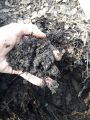 Petite Surface - June 28, 2021 - carrot trials on bare soil
 -
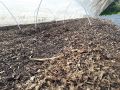 Petite Surface - June 28, 2021 - carrot trials on bare soil
 -
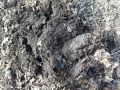 Petite Surface - June 28, 2021 - carrot trials on bare soil
 -
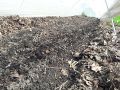 Petite Surface - June 28, 2021 - carrot trials on bare soil
 -
 Petite Surface - June 28, 2021 - carrot trials on bare soil
.jpg)
.jpg)
.jpg)
.jpg)
.jpg)
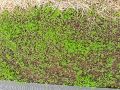
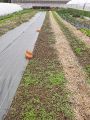
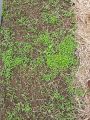
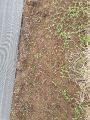
- At Ferme d'Alex, a carrot trial on bare soil after 1.5 months tarping was unsuccessful as the carrot crop was destroyed. Score 0/5 is given to this itinerary.
-
 Ferme d'Alex - carrots on bare soil - June 30, 2021
 -
 Ferme d'Alex - carrots on bare soil - June 30, 2021
 -
 Ferme d'Alex - carrots on bare soil - June 30, 2021
 -
 Ferme d'Alex - carrots on bare soil - June 30, 2021
 -
Ferme d'Alex - carrots on bare soil - June 30, 2021
.jpg)
.jpg)
.jpg)
.jpg)
- At Ferme Les légumes du Désert, false seedbeds are successful! However, the rotavator was passed on 2 cm.
You can find the full technical itinerary video here.
Cabbages
At the La Petite Surface farm, red cabbages were planted at the end of May on 5 cm of straw, 3 rows with 40 cm spacing to produce small cabbages and limit weed growth. However, 1 hour of weeding was necessary. Increasing the straw thickness to 10 cm is possible to reduce weed pressure. A rating of 4/5 is given to this mulching.

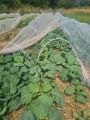
Here is a second feedback from La Petite Surface : Previous corn salad then mulching in February. Uncovering at the end of May then cabbages are planted in 5 cm of straw. There is about one regrowth of wheat per m², i.e. 5% coverage, and part of the bed is under bindweed pressure (50% coverage). For now, the bindweed is not problematic for the cabbage but vigilance is needed to prevent bindweed from growing over the cabbages and starting to smother them. Due to the bindweed pressure, a rating of 2/5 is given to this mulching.
-
-
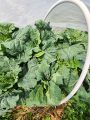 Milanese cabbages - Petite Surface


At GAEC La Closerie, cabbages are mulched with 20 cm of hay. One 45-minute weeding is necessary. A rating of 4/5 is given to this method.
Squashes
All market gardeners in the group destroy their grassland by planting squash crops on plastic mulch. This method allows starting cultivation from the first year of installation without soil tillage or weeding. A rating of 5/5 is given to this technical method.
You can learn everything about this technical method by watching this video filmed at Ferme des Gobettes:
Spinach
- At the Annélides farm, 1 hour is needed to spread 3 cm of compost and sow at JP1 on a bed. 4 rows, spaced 5 cm apart on the row, and 20 cm between rows. Weeding is done during spinach harvest. Watering every 2 or 3 days. Harvest time for 10 kg: 15 minutes.
- At La Petite Surface, spinach is sown with a precision seeder at the end of September under greenhouses on 3 cm of compost. 6 rows on a 75 cm bed. No weeding but harvesting is problematic. A rating of 4/5 is given.
You can find the technical method: spinach & corn salad on compost by clicking on this video:
Raspberries
Raspberries do not need to be mulched. However, vigilance is necessary regarding bindweed. Perform weeding if it climbs too much on the plants.
Bush beans
At the Ferme des Gobettes, bush beans are sown in woven fabric. Seeds are sown directly into holes in the plastic mulch then covered with a handful of compost. Three sowings are staggered. The first sowing is done early April then one every two months. 3 rows per bed and 20 cm spacing between plants. Walkways are covered with 20 cm of straw. No weeding.
Onions
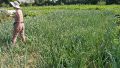
At La Petite Surface, 5 cm of wheat straw allows low pressure with only 5% of thistle and rumex per m². The first photo shows only one major 4-hour weeding in early July to facilitate harvest. In the second and third photos, the bed is invaded by creeping potentillas. According to Marc (the market gardener of La Petite Surface), potentilla has little effect on yield since the onions were already large-sized before potentilla took over. Here, weeding is only done to speed up harvest. The previous crop plays an important role since the bed was mulched during winter. A rating of 3/5 is given for the effectiveness of this mulching.


Potatoes
- At the La Petite Surface farm, after winter mulching, potatoes are laid on the ground then covered with 30 cm of straw. This thickness is sufficient to maintain low weed pressure : 5% coverage of thistle. A rating of 4/5 is given.


- At GAEC La Closerie, potatoes are mulched with 50 cm of hay. No weeding is necessary. A rating of 5/5 is given.
- At Ferme des Gobettes, 40 cm of straw is sufficient to cover potatoes without weeding. No weeds are present. Shoots emerge from the straw after 5 weeks and yield well. After potato harvest, the straw is shredded while waiting to plant leeks. Meanwhile, potato regrowth allows offering early potatoes. Since this mulching allows three harvests, a rating of 5/5 is given.
Leeks
- At GAEC La Closerie, leeks are mulched with 20 cm of hay. 2% rumex, 5% thistle and 1% Chickweed. One 1-hour weeding is necessary. With 20 cm of hay, coverage is 100%, a rating of 4/5 is given.

- At La Petite Surface, leeks are transplanted mid-June into 3 cm of straw. Mulch coverage is 90%. One weeding in mid-August, 1 hour per 20 m long bed, is sufficient to reduce pressure to an acceptable level. The previous squash on plastic mulch is an important factor in weed management on this method. However, regrowth of thistles is present at 35%, indicating that the soil is compacted on this bed. Additionally, a marsh is located 20 m from the bed, so it is likely the soil is becoming asphyxiated by hydromorphy causing nutrient blockage. Consequently, the leek size is small. 3 cm of straw appears to be the minimal thickness for leek cultivation.
The first photo was taken immediately after leek transplanting (mid-June). The second photo was taken on October 10 after weeding done mid-August :


The photo below is an extreme case because the grower could not spread 5 cm of compost on the leeks. A strong emergence of goosefoots and knotweed is observed.

- At the Le jardin des Peltier farm, residues from the previous crop are shredded then the bed is mulched to a height of 15 cm. Leeks are then planted with a planting fork through the straw : 4 rows per bed with 12.5 cm spacing on the row. After good watering, an insect net on hoops is installed. Weed pressure is low with < 5% knotweed, < 5% fumitory and 10% thistle. A 4-hour weeding for 150 m² is necessary.
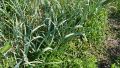
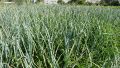
- At Ferme des Annélides, 6 straw bales are spread then shredded over 300 m² after a long mulching (8 months). Holes are made with a 5-tine dibbler. 15,000 leeks are transplanted with a density of 35 plants/m². A rating of 5/5 is given for this method since only one 1-hour weeding for the 300 m² was necessary to control creeping potentilla (70% coverage before weeding). Economic data are recorded on this ITK sheet.
-
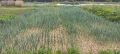 Ferme des Annélides - 45 days after planting - little weed growth
 -
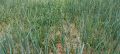 Ferme des Annélides - 45 days after planting - non-problematic potentilla
 -
 Ferme des annélides - leeks on straw
 -
 Ferme des annélides - creeping potentilla covering but not problematic
 -
 Creeping potentilla covering but not problematic


.jpg)
.jpg)
- At L'Haras Tatouille, leeks are transplanted on 6 cm of straw after a previous crop of onions then radish then green manure of phacelia. The subsoiler and a hoe-hiller were used to make the beds (mounding to facilitate harvest). A rating of 5/5 is given for 4 hours of weeding for 180 m² cultivated. The same method but with 6 cm of compost also gave interesting results and required only 4 hours of weeding for 180 m².
Data analysis
.png)
.png)
Tomatoes
At Ferme des Gobettes, tomatoes are planted in strawy manure (20 to 30 cm). 2 rows on a bed. Plants are staggered. 75 cm between plants. No weeding because tomatoes are no longer irrigated from the end of July. A pass with a shredder is done at the end of the crop then fava beans are transplanted into the residues. Crops (e.g. lettuce, fennel) on plastic mulch are then grown to avoid weeding. This method significantly reduces weeding over three successive crops. A rating of 5/5 is given. Warning! Strawy manure does not work with eggplants and peppers!
Lettuces
- At La Petite Surface, autumn lettuce plants are transplanted under greenhouse after a false sowing (transplanting first half of October). The previous cucumber on plastic mulch allows a clean bed but to germinate weeds and reduce their pressure during lettuce cultivation, the bed is irrigated. Once weeds have germinated, a pass with a market garden hoe destroys them. Lettuce plants are transplanted into 3 cm of straw.
Transplanting lettuces after a false sowing :

.jpg)
- At Ferme des Gobettes, lettuces are grown on woven fabric: 4 rows per bed and one plant every 20 cm. No weeding is done, a rating of 5/5 is given.
Cette technique s'applique aux cultures suivantes
La technique permet de favoriser la présence des auxiliaires et bioagresseurs suivants
La technique limite la présence des auxiliaires et bioagresseurs suivants
La technique est complémentaire des techniques suivantes
La technique est incompatible avec les techniques suivantes
- Localized chemical weeding on the row, which can be combined with sowing or a hoe
- Mechanical weeding in the open - Rotary hoe

