Taoufik Oualmadou Farm
Farm with orchard-vegetable garden and food forest.
Toufik Oualmadou
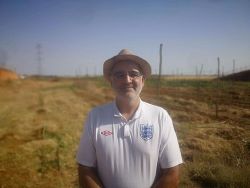
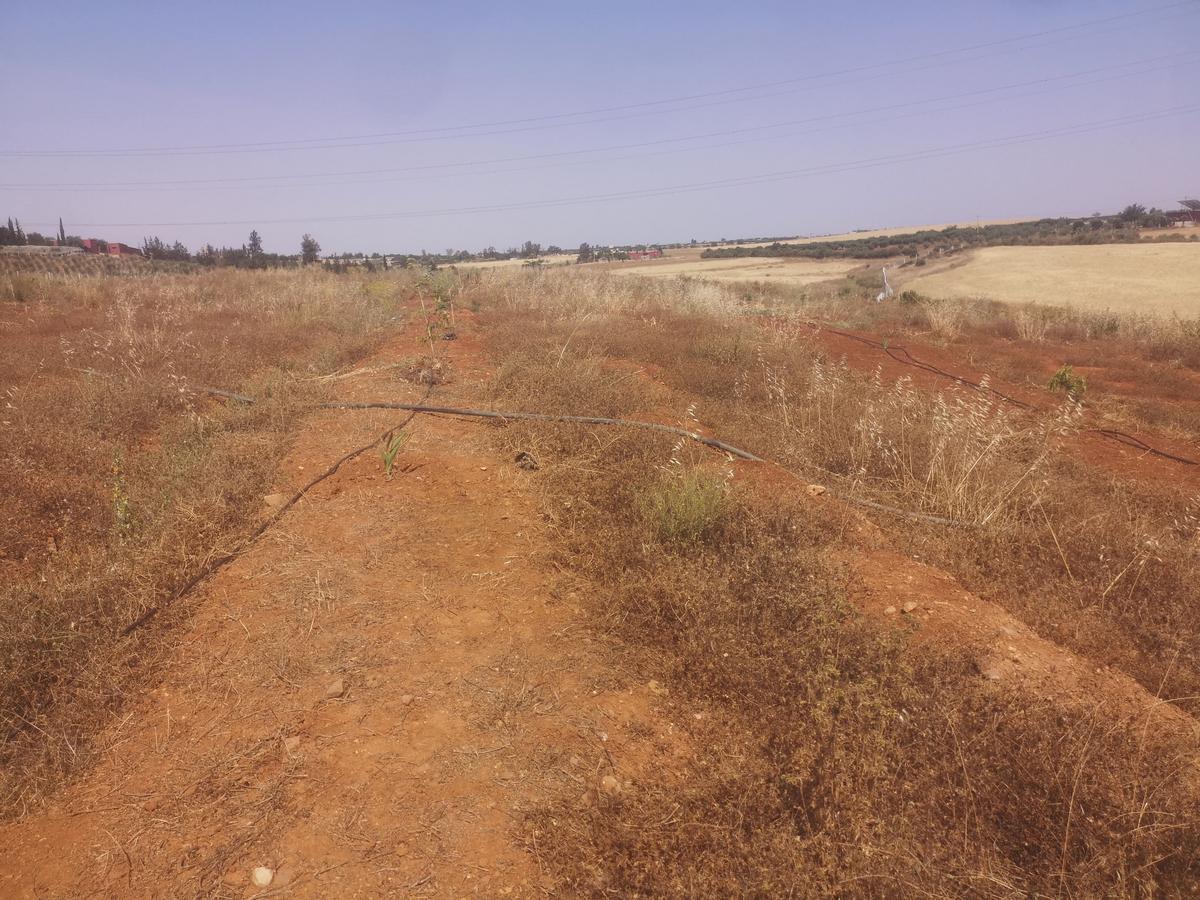
Toufik Majjaoui, a farmer in Tiflet, Morocco, cultivates his land according to agroecology principles. Here is a portrait of his farm.
Context
The farm
- Farmer's name: Toufik Majjaoui
- Farm name: Toufik Majjaoui Farm
- Location: Tiflet, Morocco
- Date of installation: 2021
- Cultivated area: 4 ha.
- Soil texture: Loamy-Clayey
- Number of people working on the farm (FTE): 1.75
- Climate: According to the Köppen-Geiger climate classification, Rabat has a Mediterranean climate with hot summers (Csa). Temperatures generally range between 13 °C and 24 °C throughout the year, with extremes rarely dropping to 5 °C or rising to 39 °C. Average annual rainfall is about 383 mm, spread over 52 rainy days per year.
Labor and conditions
- 1 full-time worker and 1 three-quarter time worker.
- A non-specialized worker is paid 100 dirhams per day. A worker with agricultural skills is paid 120 dirhams. This motivates them and encourages them to return to work on the farm.
Marketing
In 2024, he marketed about ten baskets per week to close friends, as well as to two restaurants. This marketing test was then paused; he hopes to restart it in July 2025.
Plant production

- 1.5 hectares arranged as a food forest with swale, combining fruit trees with support trees chosen for their ability to produce biomass or improve soil quality (notably nitrogen-fixing species like some Fabaceae). This system aims to promote natural soil regeneration while diversifying production.
- 1 hectare organized in cultivation beds, integrated with rows of support trees. These trees play a key role in the microclimate and soil fertility. The crops follow the same layout as in the Mama Ghaïa Farm.
Study, training and life path
Toufik Oualmadou has always been passionate about nature. During the COVID-19 lockdown, he realized his deep desire to have a piece of nature of his own and to be able to feed his family. It was at that time, in 2021, that he bought the land, a few months after the lockdown ended. Toufik Oualmadou is a banker but visits his garden 2 to 3 times a week to ensure everything is going well.
Farm history

The land has a particular feature: excavation work was done about thirty years ago during the construction of a road to recover stones. This work deeply altered the land profile, so much so that the plot is at least 3 meters lower than neighboring plots. The land was then left fallow, invaded by vegetation, notably cacti.
When Toufik took over the plot, he had to spend three to four days uprooting the cacti. He chose to remove them because they did not bring any particular benefit to the system: they were neither edible nor useful for mulching, took up a lot of space, and did not fix nitrogen.
Motivations and objective
- The main objective of his farm is to feed his family and have a natural space of his own, marketing is secondary for him.
- In the long term, he also wishes to develop his own nursery to gain autonomy in seedlings, and open the farm to the public through workshops and educational visits.
Agronomic aspect
Farming practice
Water management
- The farm operates with a well and a reservoir. The reservoir has a volume of 950 m³, with dimensions of 20 x 15 x 3 meters.
- A problem occurred with the well: Toufik had requested a depth of 120 meters, but the well only reached 100 meters. Not being able to be present on site, the instructions were not followed, and he now suffers the consequences, with a water shortage.
Hedge on the west side
- A hedge of pyracantha was planted on the west side of the land, every 40 cm, in a continuous trench. Planting time: about two days over 1200 linear meters.
- A second hedge line, planted behind the first, combines shrubs and taller size trees to create a canopy with varied heights, conducive to morning dew condensation. The second row mainly consists of so-called 'support' trees, chosen for their ability to produce biomass, fix nitrogen, and host certain companion plants. For its installation, holes of 50 × 50 × 50 cm were dug every two meters. Planting time: at least six days of work for two people over 1200 linear meters, although the work was done progressively.

Prickly pear cactus hedge
On the south fence of his plot, in place of the old cacti, he replanted, at the back of the plot and at the bottom of the swales, prickly pear cacti. These form an effective hedge against livestock and intrusions, produce nectar appreciated by bees, and their fruits have regained strong market value.
Note Since the spread of the cochineal insect on the prickly pear cactus in Morocco, prickly pear populations have greatly decreased. This fruit, once very common and sold for less than 1 dirham each, now sells for about 5 dirhams. A friend of Toufik even exports it abroad at a price of 6 euros per kilo.
Management of prickly pear cochineal
- To fight against cochineal on prickly pear cactus, he uses two methods:
- Direct spraying of foliage with a water jet to mechanically dislodge the pests.
- A preparation made from 1 liter of water, 1 tablespoon of baking soda, and a small handful of black soap, sprayed on the foliage.
Practices of interest
Swale and food forest on sloping land
Context
The land has a marked slope, exposed to significant erosion risk, especially during intense storm events. The challenge is to design an agricultural layout that limits this risk while maintaining production capacity.
Objective
Enhance sloping land by planting trees, following an agroecological approach. This choice not only reduces erosion but also promotes water storage, maintains better soil moisture, and stabilizes the land structure, while developing sustainable production.
Topographic arrangements and swales
- To redevelop the land, Toufik worked with a survey engineer.

The engineer marked contour lines by planting sticks at regular 1-meter intervals (the more precise, the more horizontal the contour line). On average, there was a one-meter elevation difference between each line, corresponding to about 6 meters horizontal spacing (80% respect this spacing). Sometimes, this spacing varied according to the land profile.
- The swales (or swales) were dug using an excavator, initially 1 meter deep. Over time, they have compacted and some now only reach 50 cm depth. The earthworks lasted two and a half days. They allowed the creation of a total of 1800 linear meters of swales, i.e., 12 or 13 lines of about 150 meters each.
Note He recommends digging as deep as possible from the start, as part of the volume will naturally fill in.
Costs and resources mobilized
- The excavator rental cost 2000 dirhams per day at the time, with fuel priced at 17 dirhams per liter. Today, a tractor with operator would cost between 1300 and 1500 dirhams per day. Besides the operator (usually included in the rental), a worker is needed to assist with maneuvers.
- The surveyor's work, which took three days, was not charged: the engineer was a family member of Toufik, and Toufik was able to barter fencing for the service. Normally, this service would have cost about 3000 dirhams.
- The swales were completed on February 22, 2023, but were not yet accompanied by plantings.
Swale planting
The tree planting took place in February 2025 and finished in April 2025. It was delayed to allow full installation of the irrigation system.
Plant positioning follows several logics:
- At the top of the slope: trees more demanding in water and maintenance, benefiting from deeper soil (up to 2–3 meters) and higher water pressure;
- At the bottom of the slope: trees more drought-resistant, shallow soil (bedrock at 45 cm), lower water pressure.
Labor mobilized
- Planting of swale trees, following contour lines, took 10 days for two people (including support and fruit trees); it was also done progressively.
- However, herbaceous plants are not yet planted; notably Tithonia still needs to be installed.

Water management
- Irrigation is ensured by a drip irrigation system, with 9 electronic valves allowing remote management.
- Frequency varies with climate: every two or three days in hot periods, otherwise once every 10 days.
- Each irrigation lasts about 45 minutes, and each dripper delivers 8 liters of water per hour. For swale trees, two lines of drippers are installed.
Fertilization
In the swales, each tree receives on average 2.5 kg of manure. Support trees also improve soil fertility by producing biomass that can be returned to the soil through occasional pruning.
Note The manure used comes from a neighbor who raises sheep without chemicals or vaccines. One ton costs 400 dirhams.
Result
- The benefits of the swale are already visible; erosion is seen on the path but absent in the swales.
- It is also observed that the soil in the swale mound is more moist despite the heat.
- Toufik also explains that he has seen water being stored in the swale trenches after heavy storms.
Note from Jihad El Malih, agroecology advisor: “It is from the seventh year that swales fully reveal their benefits. Tree roots, now well developed, access a larger water stock in the soil. The canopy in turn protects the swale, thus limiting evapotranspiration. Moreover, swales contribute to groundwater recharge, significantly reducing irrigation needs: even in Morocco, only supplementary irrigation remains necessary.”
Toufik's advice
- For swale installation, plan well in advance and do not rush because the setup will last many years and will be difficult to modify.
- Also consider alternatives to prevent water from running straight down paths between swales. According to Toufik, there are two solutions: small V-shaped trenches on the path to divert water sideways, or making a path that is not straight between swale lines.
Protection of strawberry beds with metal mesh
Context
The producer noticed that fine mesh nets, usually used to protect tomato crops against thrips, were not suitable for strawberries. Indeed, these nets block a significant amount of light and prevent access to pollinators, essential for good strawberry fruiting. Faced with this constraint, he sought an alternative solution with his agricultural advisor, Jihad El Malih, who suggested a metal mesh tunnel system.

Technical description of the innovation
- The solution is based on installing Nantes-type tunnel hoops, spaced one meter apart, on which metal mesh is fixed.
- Each tunnel measures about 1 meter wide by 20 meters long. About a dozen hoops are used per bed.
- This system effectively protects strawberries while maintaining good ventilation, satisfactory sunlight, and free access for pollinators.
Note According to Toufik, the mesh is flexible enough that its removal is not complicated when intervention on the bed is needed.
Estimated setup cost per bed
- Metal mesh: 350 dirhams
- Hoops: 150 dirhams
- Total: 500 dirhams
Toufik's advice
No specific technical recommendation. According to him, just installing the system is enough to see the benefits.
Photo gallery of Toufik Oualmadou's farm
Sources
Interview with Toufik Oualmadou conducted in 2025.

Cette page a été rédigée dans le cadre du projet Urbane avec le soutien financier de l'Union Européenne, avec la participation du Centre National d'Agroécologie et de Ver de Terre Production