

False seedbed, hoeing and pelargonic acid on sunflower at INCDA Fundulea (Romania)


At the national agricultural research institute in Fundulea (INCDA), in south-eastern Romania, a trial has been comparing since 2025 the false seedbed, hoeing and a natural herbicide, pelargonic acid, with the conventional herbicide programme for sunflower. In 2026, the trial continues on winter wheat; figures have not been published yet.
This trial is one of the Romanian case studies of the European project Conserwa; it is run by the company ALYNX and INCDA Fundulea, and monitored by the Aristotle University of Thessaloniki (AUTH)[1].
Trial question
- Can the false seedbed, hoeing or pelargonic acid replace herbicides in sunflower?
Leviers testés
- Facteurs: False seedbed; hoeing; pelargonic acid
- Modalités: False seedbed; mechanical weeding (hoeing); pelargonic acid; conventional weed control; untreated
- Répétitions: Plots per treatment
Experimental sites
The trial takes place at the national agricultural research and development institute in Fundulea (INCDA), in Călărași county, on conventional plots with drip irrigation. It was initially planned in Constanța; pelargonic acid was added to the protocol when it moved[1].
Protocol
- Crops: sunflower FD15E27 in 2025 (70 cm rows); winter wheat Ursita in 2026.
- Treatments: false seedbed; mechanical weeding (hoeing); pelargonic acid (20 l/ha); conventional weed control; untreated.
- Measurements: weed surveys in April, May and June 2025; soil sampling; weather station, six soil probes and two pH sensors installed by the partner CyRIC[1].
Timeline
| Date | Operation |
|---|---|
| 25/02/2025 | Urea (200 kg/ha) |
| 02/04/2025 | False seedbed |
| 17/04/2025 | Pelargonic acid (20 l/ha); photos before and after treatment |
| 24/04/2025 | Sunflower sown; herbicide (Frontier Forte) on the conventional plots; soil sampling |
| 14/05/2025 | Weather station and sensors installed |
| 24/05/2025 | Hoeing |
| 30/05/2025 | Herbicide (Leopard 5 EC) on the conventional plots |
| 16/07/2025 | Soil sampling |
| September 2025 | Harvest |
| 2025-2026 | Winter wheat: false seedbed in October, sowing in December, surveys until July 2026 |
-
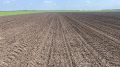 The Fundulea trial field
-
 Preparing the pelargonic acid solution
-
 Spraying pelargonic acid
-
 Weeds after the pelargonic acid treatment
-
 Sunflower sowing


Results
Interim results: weed densities per treatment have not been published yet.
Conclusion
- The trial tests pelargonic acid in arable crops, before sunflower sowing.
- Figures from 2025 (sunflower) and 2026 (winter wheat) are expected[2].
This work was carried out as part of the Conserwa project, funded by the European Union (Horizon Europe programme, grant agreement No 101081802).
