Geraniol is a monoterpenic alcohol found in many essential oils, notably rose oil, geranium, lemon, and citronella. Its chemical structure makes it a natural antimicrobial and insect repellent agent that has led to its exploration in agriculture, offering an alternative to traditional pesticides.
Geraniol can be used in various crops, including potatoes, tomatoes, and cucumbers, to combat the fungal disease: Botrytis cinerea. It is also an effective insecticide against insects such as the European corn borer and aphids, and can be used against nematodes such as Meloidogyne javanica. It is also useful in poultry farming where it helps to fight against red mites that parasitize them.
Geraniol is biodegradable and presents low toxicity to non-target organisms. Its use can therefore reduce the environmental impact associated with conventional agriculture. Since geraniol is still in the experimental phase, its use has only been demonstrated in controlled fields or greenhouses and may be subject to improvements over time.
Difference with pelargonic acid
Pelargonic acid (nonanoic acid) and geraniol are two natural chemical compounds derived from plants, but they have very different chemical structures, properties, and uses.
Here is a short list of plants that naturally synthesize it:
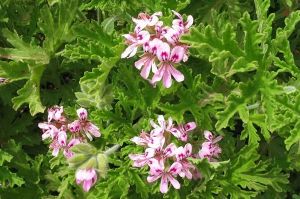
Geranium rosat: (Pelargonium sp). This is not a particular species of geranium but several from the genus Géranium rosatPelargonium. It belongs to the Geraniaceae family.
Spanish sage (Salvia lavandulifolia).
Ceylon citronella (Cymbopogon nardus). Also known as citronella.
Italian immortelle (Helichrysum italicum). Italian immortelle is a herbaceous plant of the Asteraceae family considered protected in several countries but cultivated as a medicinal plant.
Roses (Rosa sp). Geraniol is also found in various rose species, especially Rosa gallica, Rosa damascena, and Rosa centifolia.
Bay laurel: (Laurus nobilis): Finally, bay leaf also contains geraniol.
Properties of geraniol in agriculture
Natural insect repellent: Geraniol acts as a natural repellent against many harmful insects such as aphids and beetles. It also acts against poultry red mites by destroying the chitin that forms the insect's exoskeleton.
Antifungal[1]: Its application can help limit the spread of fungal pathogens by stimulating the plant defense response against them. Indeed, cucumber plants treated with geraniol showed increased levels of myricetin, chlorogenic acid, and kaempferol rhamnoside, important compounds related to responses against fungal pathogen attacks.
Nematicide: Geraniol has paralyzing properties and inhibits differentiation and egg hatching of nematodes of the genus Meloidogyne species javanica.
Urban agriculture: In the context of expanding urban agriculture, geraniol can offer a more ecological solution for crop protection in urban environments, where proximity to housing raises concerns about the use of chemical pesticides.
Greenhouses and indoor crops: Geraniol's properties as an insect repellent make it an attractive option for protecting greenhouse and indoor crops, where pest regulation can be more complex.
Conventional agriculture:Conventional farmers may choose to use organic products as part of their agricultural practices.
Usage
Needs identification: Before applying geraniol, it is essential to identify the specific pests or diseases to be treated.
Appropriate formulation: Geraniol is often available as essential oil or extracts (98% pure). For agricultural use, it is formulated as a liquid solution (commercialized biopesticides already prepared) or as an emulsion (essential oil or 98% geraniol in a solvent such as water).
Foliar application: A common method of applying geraniol is to spray the solution directly onto plant leaves. It is recommended to perform this operation early in the morning or late in the day to minimize rapid evaporation and maximize efficacy.
Use in irrigation systems: Geraniol can also be integrated into irrigation systems, allowing uniform distribution over the entire crop. This method is particularly effective for large agricultural operations.
Application frequency: The frequency of applications depends on the life cycle of the targeted pests or diseases. Regular applications may be necessary to maintain continuous protection, while respecting manufacturer recommendations to avoid over-application.
Precise dosage: Dosage recommendations vary depending on crop type, product concentration, and plant growth stage. Some examples are mentioned below.
Continuous monitoring: After application, it is important to carefully monitor treatment efficacy and adjust if necessary (having always been tested in the experimental phase).
Integration into a global strategy: Geraniol use can be more effective when combined with crop rotations or other biological control methods.
At what concentration to use it, how to prepare and apply?
Geraniol as pure essential oil or 98% pure foliar extract
The essential oil can be used. It can be diluted in a solvent such as water (nanoemulsions: droplets of one liquid suspended in another) to reach the desired concentration. Concentrations demonstrated as effective in studies (available in references) range from 1 to 5% geraniol. To know how many mL of essential oil to incorporate per liter of water, use the following calculation, knowing that the density of geraniol essential oil is 0.88:
Volume of essential oil to incorporate for 1 L of solution = (Desired concentration / density) x 10 (multiplied by 10 because otherwise the result is for 100 mL of final solution, not 1 L).
For example, if the desired concentration is 2.5% geraniol, then (2.5 / 0.88) x 10 = 28.4 mL of geraniol per 1 L of pure water.
For 1 hectare of crop (approximately 5000 plants), count on 52.7 L of preparation. In the sprayer, put 50 L of pure water and 500 mg of surfactant powder most often (sodium laureth sulfate for example). The operation can be done twice in case of heavy foaming. Then, in a separate container or in the incorporator (before suction), add vegetable oil in the same quantity as the essential oil. In this example, we decide to create a 2% geraniol concentrated solution, which equals 2 / 0.88 x 10 x 50 L = 1.1 L of geraniol. So add 1.1 L of vegetable oil (preferably olive oil which withstands high heat well and will provide better stability of the preparation) then 1.1 L of geraniol essential oil or 98% pure geraniol. Then add 0.4 mg of surfactant again (surfactant is added several times to avoid foaming) and 500 mL of water. Finally, shake well before use. Then incorporate the preparation into the sprayer and treat the 1 ha plot.
Another way to make the nanoemulsion was also done on cucumber crops against Botrytis. Commercial 98% geraniol (111 µL) was dissolved in diethyl ether (3 mL to facilitate solubilization), followed by addition of sodium dodecyl sulfate (19.5 mg which has detergent and antifungal effects) and pure water (30 mL) to prepare the nanoemulsion in the cucumber crop study. This preparation treated only 3 plants. For 1 ha of cucumber plants, it would require 185 mL of 98% geraniol, in 5 L of diethyl ether with 32.5 g of sodium dodecyl sulfate and 50 L of pure water.
These nanoemulsions are to be sprayed directly on plant leaves.
Geraniol in already prepared and commercialized products
Products based on geraniol are also commercially available and ready to use:
These four biopesticides are in capsule form, which once diluted with water in the sprayer tank, form a suspension (emulsion). When sprayed, the diluted emulsion allows uniform and precise application of the active ingredient on the crop, which is essential for effective pest control.
Here are the conditions to respect for the use of these fungicides:
Max dose
Max number of applications
Application stage
Pre-harvest interval
Minimum interval between applications
Minimum buffer zone before aquatic area
4 L/ha
4
Min: 60 max: 89
3 days for wine grapes and pome fruits
7 days for table grapes
7 days
5 m
Nematicide (Meloidogynesp) for tomato, eggplant, peppers, strawberry and cucurbits with inedible skin
Cedroz (contains 12.1% geraniol) = nematicide (Meloidogynesp) for the above-mentioned crops
This product is applied by drip irrigation system.
Here are the conditions to respect for the use of this nematicide:
Max dose
Max number of applications
Application stage
Pre-harvest interval
Minimum interval between applications
Minimum buffer zone before aquatic area
9 L/ha
6
Min: 10 Max: 89 for tomato, eggplant, pepper, strawberry and cucurbits with inedible skin
This product acts immediately on contact and can be sprayed inside the building even in the presence of animals on walls at a rate of 50 to 100 mL/m². It can be applied every 2 or 3 months and in case of heavy infestation, can be reapplied 8 days after the first application.
Safety equipment
Geraniol causes skin irritation. It has low sensitizing potential but becomes a stronger sensitizer after metabolism (i.e., when it degrades due to poor storage). Extra geraniol and geranyl acetate are not considered sensitizers. No data on chronic toxicity, carcinogenicity, or reproductive toxicity in humans is currently available (as of December 2023).
Before using the product, wear personal protective equipment (PPE).
Cost
The price of geraniol-based biopesticides ranges from 20 euros for 500 mL (for the poultry red mite spray) to 56 eurosfor 1 L of 98% pure geraniol. 96% pure essential oil is also available, priced at 139 euros for 0.5 L.
Storage
It is essential to keep the product in its original hermetically sealed packaging to avoid contamination or alteration. Geraniol should be stored in a cool, dry, well-ventilated place, away from direct sunlight. Like many chemical compounds, geraniol is flammable and must be kept away from heat sources, flames, or reactive chemicals.
Advantages
Geraniol has multiple advantages: it has a broad spectrum of efficacy (insecticidal, fungicidal, nematicidal properties) and acts on many cropswithout toxic effects on the environment (no residues if used at proper dosages and biodegradable). Geraniol is also classified as not dangerous for aquatic organisms.
Limitations
Variable efficacy depending on environmental conditions. Further research is needed to optimize formulations and application methods.
Potential residues: Geraniol persistence and the possibility of leaving residues on crops may vary depending on several factors:
Degradation: Geraniol degrades faster in the environment through natural processes such as sunlight exposure (photochemical degradation) and chemical reactions with air or water (oxidation).
Dosage and application frequency: Excessive use or frequency may potentially lead to residue accumulation.
Pre-harvest interval: It is essential to respect manufacturer-recommended intervals to allow product breakdown and minimize residues at harvest.
Potential resistance[2] to geraniol: Although no studies have yet proven cases of resistance exist regarding the different cases described below, this does not mean it is impossible. Indeed, studies have shown possible resistance development using repeated treatments with biopesticides such as neem oil on peach aphid populations.
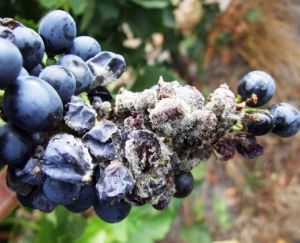
Problem identification: The winemaker observes signs of downy mildew on the leaves of the vines, notably brownish spots Mildiou sur vignes and a white felt characteristic of this type of disease.
Choice of formulation: The winemaker opts for a formulation based on geranium essential oil, rich in geraniol. He chooses a emulsifiable solution (essential oils incorporated into pure water with other ingredients described above) to facilitate uniform application.
Dosage:Concentration at 2% geraniol in the solution (i.e., 1.1 L of geraniol used per hectare). This concentration is considered sufficient to fight downy mildew while minimizing any risk of phytotoxicity on the vines.
Application method: The geraniol solution is applied by foliar spraying. The winemaker performs this operation early in the morning, when weather conditions are favorable (no rain, low wind) to maximize product adherence on the leaves.
Application frequency: The winemaker establishes an application schedule based on the life cycle of downy mildew and weather conditions. He decides to apply geraniol every two weeks during the season favorable to downy mildew development.
Monitoring: The winemaker carefully monitors the condition of the vines after each application. He takes notes on the evolution of downy mildew symptoms and adjusts the application frequency or concentration if necessary based on observations.
Integration into a global strategy: Geraniol treatment is part of a broader integrated management strategy including cultural practices, regular monitoring, and, if necessary, other biological control methods.
Deterrence of egg laying by the eggplant shoot and fruit borer[4]
Dégât des larves sur jeune aubergine
Among the recorded uses is the deterrence of egg laying by the eggplant shoot and fruit borer (Leucinodes orbonalis). This is a pest lepidopteran currently found in South and Southeast Asia.
When diluted geraniol (28 mL of essential oils incorporated per liter of pure water, for a final solution concentrated at 2.5% geraniol) is sprayed on the plant before the butterfly lays eggs, which corresponds to the flowering and fruiting period of eggplant, a notable reduction in egg laying on the plant (> 90%) is observed. Geraniol is a means of oviposition deterrence (the odor disrupts female behavior).
Inhibitor of fungal growth of Botrytis on cucumber[5]
Another known use of geraniol is the inhibition of "gray mold" Botrytis cinerea growth on cucumber plants, where it has been used in two types of formulations: one is a diluted geraniol spray (solution at 2.5% geraniol, i.e., 29 mL of 98% concentrated geraniol per liter of water), and the other is in the form of geraniol nanoemulsions (solution at 1% geraniol, i.e., 10 mL of essential oil per liter of water). Both were prepared during the experimental study and applied by spraying on the entire plant. The effective concentration to inhibit gray mold for the geraniol nanoemulsion preparation is much lower than that of diluted geraniol alone and was effective for a longer period of time. The nanoemulsion formulation would be a more favorable choice.
For one hectare of cultivation, it would therefore be necessary to prepare a 50 L nanoemulsion, including 568 mL of geraniol essential oil, 50 L of pure water, as well as 500 mg of surfactant such as sodium laureth sulfate and also 568 mL of vegetable oil such as olive oil.
Effect of geraniol on the nematode Meloidogyne javanica[6]
Meloidogyne javanica
Another study showed that geraniol has a strong toxic effect on root-knot nematodes Meloidogyne javanica which affect tomato plants. A product at 98% geraniol was tested at different concentrations after dilution in potted soil to observe the toxic effect on nematodes. It was found to have a paralyzing effect and inhibited differentiation and hatching of nematode eggs at concentrations from 0.5% (5.1 mL of 98% geraniol / 1 L pure water) to 1% geraniol (11.5 mL of 98% geraniol / 1 L pure water).
The nematicide Cedroz (which contains 12.1% geraniol) can be used if it concerns tomato, eggplant, pepper, strawberry, and cucurbit crops with inedible skin and would save the farmer from having to prepare his own product. When using this product, 9 L/ha is required, the maximum number of applications is 6 per year, and the interval between each is 5 days.
Geraniol used for protecting plums against brown rot: Monilinia fructicola after harvest [7]
Pourriture brune sur prune
An article reports that geraniol appears very promising in enhancing the effectiveness of edible coatings to preserve the quality of plums (Prunus salicina Lindl.) during storage. Incorporated into coatings at a concentration of 0.2% (equivalent to 2 mL of 98% geraniol per liter of coatings) composed of hydroxypropyl methylcellulose (HPMC) and gum arabic (GA), geraniol demonstrated its ability to significantly reduce the incidence and severity of brown rot (Monilinia fructicola), a common postharvest disease. In the same study, it was also found to maintain fruit firmness and delay color changes without compromising internal maturity and plum quality.
Geraniol used to combat the poultry red mite, Dermanyssus gallinae[8]
Poux rouges
The toxicity of geraniol to Dermanyssus gallinae has been studied in vitro in the laboratory. It is the most economically harmful ectoparasite for laying hens in Europe because it causes anemia (weakened and stressed hen), transmission of diseases (e.g., salmonella), and disrupted production (decreased laying, yolk discoloration, stained eggs).
Exposure of D. gallinae to concentrations of 0.5, 1, and 2% geraniol over 24 hours resulted in 100% mortality of D. gallinae at all doses used. Since the in vivo efficacy of geraniol against D. gallinae has not been evaluated, results may differ depending on environmental variables. The geraniol concentration will therefore likely need adjustment to achieve effects.
In the experiment, they used geraniol "FulltecInsect Killer Concentrate 30% Geraniol", concentrated at 3% geraniol per liter. « Stop Poux Repell », which is in spray form, has ovicidal, larvicidal, and adulticidal action. It acts immediately by contact, is biodegradable, and can be sprayed inside the building even in the presence of animals on walls at a rate of 50 to 100 mL/m². It can be applied every 2 or 3 months and in case of heavy infestation, can be renewed 8 days after the first application.
Cette page a été rédigée en partenariat avec Msc Boost
↑Santra HK, Banerjee D. Antifungal activity of volatile and non-volatile metabolites of endophytes of Chloranthus elatior Sw. Front Plant Sci. 2023 May 17;14:1156323. doi: 10.3389/fpls.2023.1156323. PMID: 37265637; PMCID: PMC10229785.
↑Myriam Siegwart, Benoit Graillot, Christine Blachere Lopez, Samantha Besse, Marc Bardin, Philippe C. Nicot, and Miguel Lopez-Ferber, Resistance to bio-insecticides or how to enhance their sustainability: a review, Front Plant Sci. 2015; 6: 381. Published online 2015 Jun 19. doi: 10.3389/fpls.2015.00381
↑Pérez-Álvarez, Sofia Marinozzi, Teresa Garde-Cerdán, Gianfranco Romanazzi, Influence on grape aromatic compounds of natural fungicides used for the control of downy mildew, First published: 08 February 2022, https://doi.org/10.1002/jsfa.11814
↑Rituparna Ghosh, Dennis Metze, Surhud Sant, Maroof Shaikh, Ashish Deshpande, Dnyaneshwar M. Firake, Sagar Pandi, Chemical ecology of Himalayan eggplant variety's antixenosis: identification of geraniol as an oviposition deterrent against the eggplant shoot and fruit borer, 2023, https://doi.org/10.1111/nph.18877
↑Nathalie N. Kamou, Natasa P. Kalogiouri, Panagiota Tryfon, Anastasia Papadopoulou, Katerina Karamanoli, Catherine Dendrinou-Samara, and Urania Menkissoglu-Spiroudi, Impact of Geraniol and Geraniol Nanoemulsions on Botrytis cinerea and Effect of Geraniol on Cucumber Plants’ Metabolic Profile Analyzed by LC-QTOF-MS, 2022, doi: 10.3390/plants11192513
↑Nasiou E, Giannakou IO. Effect of geraniol, a plant-based alcohol monoterpene oil, against Meloidogyne javanica. European Journal of Plant Pathology. 2018 Nov 15;152:701-10.
↑Asgarian ZS, Palou L, Souza RF, Quintanilla PG, Taberner V, Karimi R, Pérez-Gago MB. Hydroxypropyl Methylcellulose and Gum Arabic Composite Edible Coatings Amended with Geraniol to Control Postharvest Brown Rot and Maintain Quality of Cold-Stored Plums. Foods. 2023 Aug 7;12(15):2978.
↑George DR, Biron JM, Jolly G, Duvallet G, Sparagano OA. Toxicity of geraniol solution in vitro to the poultry red mite, Dermanyssus galinae. Parasite. 2009 Dec;16(4):319-21. doi: 10.1051/parasite/2009164319. PMID: 20092065.