
Introduction: Peat Soils (Paludiculture) in the Netherlands - LANDMARC Horizon 2020
_in_the_Netherlands_-_LANDMARC_Horizon_2020.jpg)
The document discusses the importance of sustainable peatland management in the Netherlands through paludiculture, which involves wet cultivation practices that help restore degraded peatlands and maintain ecosystem services. The LANDMARC project aims to reduce carbon emissions from peat soils by implementing soil rewetting and revegetation techniques, such as planting cattails, at a pilot site in Swinkels. The project focuses on improving monitoring methods to better assess peatland carbon sequestration potential, including the use of in-situ and remote sensing technologies, and developing advanced tools for carbon mapping and greenhouse gas inventory accounting. Additionally, the project will analyze the climate risks and sensitivities of paludiculture practices based on regional climate scenarios. An exploratory assessment will evaluate the co-benefits and potential trade-offs of scaling up paludicultural practices nationwide, using land-use and economic models, and will involve developing policy strategies with stakeholders to address any adverse effects. The overall goal is to support sustainable peatland restoration and climate mitigation efforts in the Netherlands.
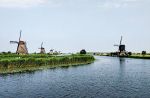
Introduction: Peat Soils (Paludiculture) in the Netherlands - LANDMARC Horizon 2020 (en)
Target countries: Nederland
Key takeaways
- Paludiculture practices in the Netherlands aim to restore degraded peatlands and reduce carbon emissions
- The project focuses on wet cultivation and soil rewetting techniques, such as revegetation with cattail, to restore ecosystems and achieve negative or zero carbon balances.
- The LANDMARC project emphasizes advanced monitoring and mapping of peatland carbon sequestration potential
- Deploying both in-situ and remote sensing methods will improve the accuracy and cost-effectiveness of assessing soil carbon storage and greenhouse gas emissions.
- Climate risk and co-benefits of paludiculture are being systematically analyzed
- The project will use regional climate scenarios and economic models to evaluate impacts, potential trade-offs, and policy strategies for scaling-up paludiculture practices.
- Intersectoral collaboration is central to peatland restoration efforts
- Land users, water authorities, local partnerships, and research organizations are jointly involved in implementing and monitoring rehabilitation initiatives.
- The initiative seeks to develop innovative tools for GHG inventory and carbon offset schemes
- Improved data collection and management methods will support more transparent and effective accounting of peatland carbon sequestration in climate mitigation policies.
Sources
- Introduction: Peat Soils (Paludiculture) in the Netherlands - LANDMARC Horizon 2020 - 2023-03-12 - https://www.landmarc2020.eu/netherlands-peat-soils-agroforestry/introduction-peat-soils-paludiculture-the-netherlands
