Reuse glass bottles

The reuse of glass bottles (wine, beer, soda, juice, soup, milk, honey,...) is organized at the national level with the network France Consigne and its 10 operators, distributed across all departments. It is organized around supporting producers, collection centers, and washing facilities.
Overview of reuse
Reuse, common until the 1960s, has gradually been abandoned by manufacturers in favor of single-use packaging. Faced with ecological transition challenges, this method positions itself as a response to the climate emergency.
The reuse sector allows producers to reduce their environmental impact by relying on a circular economy while promoting local products.
It also responds to a consumer demand. Indeed, according to a survey conducted by Ipsos in May 2023, 92% of French people support the return of reuse.
Reuse, more ecological than recycling?
Compared to recycling, which has become widespread in recent years, reuse allows for reducing energy and water consumption and CO2 emissions.

Studies show that nearly 40% of the carbon footprint of a wine company comes from the glass bottle. Given this observation and the inflationary context of glass, reuse is generating increasing interest among producers (source: Gaia Consulting Oy).
The development of the glass bottle reuse sector helps support producers who want to reduce the environmental impact of their bottles and evolve practices towards a more sustainable world.
How the sector works
A sector structured by department
France Consigne is a group of operators that provides packaging reuse solutions at the national level relying on the expertise of local sectors. The network consists of 10 operators distributed by departments:
- Alpes Consigne: 05, 07, 26, 38, 73, 74.
- Bout' à Bout': 44, 49, 53, 85.
- Consign’Up: 9, 11, 31, 32, 46, 65, 81, 82.
- Ma Bouteille S'Appelle Reviens: 07, 26, 38, 42, 69, 84.
- J'aime Mes Bouteilles: 21, 25, 39, 70, 71, 89.
- La Consigne de Provence: 04, 06, 13, 83, 84.
- L'Incassable: 13, 84.
- Oc'Consigne: 11, 12, 30, 34, 48, 66.
- Haut La Consigne: 59, 60, 62, 80.
- Rebooteille: 01, 23, 42, 69, 72.
To enable the use of packaging reuse, all types of actors are involved: consumers, producers, distributors, companies and local authorities, paper manufacturers, printers, glassmakers, bottle suppliers, logistics providers.
Product range
Since these are glass bottles, the possible contents are very diverse: beer, wine, juice, cider, soft drinks, sparkling, oil, milk, spirits, honey, and soup.

Implementation
For a farmer
We count an average duration of one year between the start and the first collected bottles. Producers buy back the bottles to put them back into circulation.
Testimonial
One of Consign’up’s partner producers, Pierre Fabre from the Domaine Gayrard, sees only advantages in this system: “It opens doors for us to customers looking for this. And for the same quality of bottle, meaning good quality bottles, it costs 20 to 25% less than new ones.”
Prerequisites
In which area?
There are operators and collection points distributed across different departments, depending on the development and attractiveness of reuse. A map allows locating them.
What support?
Operators support producers at every stage of their process. The costs of this assistance are determined through three services:

- The compliance of the dry material: Bottle standards have been determined by the Vrac et Réemploi network, a national association that federates actors in the reuse sector, all packaging combined, according to criteria of robustness, availability, and aesthetics. This also requires standardizing labels including the integration of the “Return me for Reuse” pictogram. Producers pay a fee upon entry depending on the size of the operation. The choice of bottle and label must meet specific criteria to be washable.
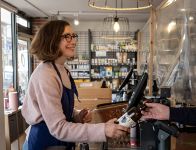
- Marketing: The start of collection within the reseller network and collection points. A monthly subscription is calculated according to the volume of collection. Consumers can return their empty bottles at collection points all over France.
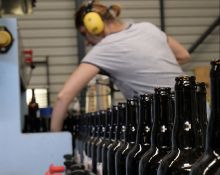
Washing service - The washing service: Replacing new supply, producers buy reused bottles at advantageous rates. For example, at Consign'Up in 2024, it costs them: €0.28 excl. VAT for washing specific bottles called “custom” and €0.33 excl. VAT if they come from the collection network.


Communication
Publication of a Producer Sheet on the network map as well as promotion on social media. In general, operators enable producers to evolve within a network of committed professionals.
Advantages
Reuse allows producers to control their supply costs through:
- Local supply.
- Exemption from eco-tax on reused packaging from washing.
- Diversification of suppliers of glass bottles.
The goal is to benefit from opportunities within the sector with distributors and meet referencing criteria that tend to become widespread.
By reusing glass bottles, one meets a strong consumer demand:
- By building customer loyalty through eco-responsible products.
- And by reducing environmental impact.
Moreover, anticipating regulation around reuse allows estates to control the implementation schedule.
Barriers
Often, producers fear the energy-intensive nature of the approach, but reuse operators’ services are there to support them.
Overview of current and future regulations
Originating from the work of the Citizens' Convention for Climate, the AGEC Law (Anti-Waste for a Circular Economy, February 2020) and the Climate and Resilience Law enacted in 2021 aim to fight climate change, notably through waste reduction. Today, eco-organizations mandated by the State, distributors, producers, and reuse operators are around the table to revive the glass reuse sector.
Their main objective is to phase out single-use plastic packaging in France by 2040, notably through the development of reuse.
The implementing decree of the AGEC law dated April 8, 2022, specifies the minimum share of reusable packaging placed on the market with a target of 10% by 2027.
| Targets for placing reusable household packaging on the market | |||||
|---|---|---|---|---|---|
| Year concerned | 2024 | 2025 | 2026 | 2027 | |
| Percentage
of reusable packaging placed on the market |
Producers declaring annual turnover
below €20M |
5% | 10% | ||
| Producers declaring annual turnover
between €20M and €50M |
5% | 7% | 10% | ||
| Producers declaring annual turnover
above €50M |
6% | 7% | 8% | 10% | |
In May 2023, the State also announced “[...] legal framework discussions before the end of the year, experiments to be implemented next year, and a network generalization within two years.”
At the European level, the European Commission also plans regulation of packaging and packaging waste within the Green Deal framework.
Eco-organizations (subsidies)
Adelphe, Citeo, and Léko are eco-organizations approved by the State to manage and finance the end of life of packaging through recycling or reuse. Any company marketing packaged products is subject to Extended Producer Responsibility and must join an eco-organization. It pays an eco-contribution that will manage the end of life of its packaging (article L541-10 of the Environmental Code).
Non-profit, these eco-organizations are funded by companies to reduce the environmental impact of household packaging through reduction, reuse, and recycling. As such, they provide producers with financial aid (subsidies) for their conversion to reuse.

How to identify a reusable bottle?
The Vrac et Réemploi Network created the national pictogram “Return me for reuse”, whose goal is to allow consumers to identify reusable packaging placed on the market.
The pictogram is provided to producers supported by a reuse operator, after validation of the bottle’s suitability for reuse. It is subject to usage conditions specified in a Graphic Charter and a Usage Regulation. It allows global and interregional identification of deposit bottles. Find it on the front label, on the back of the bottle, or on the neck.