
Managing Cover Crops Profitably Third Edition

This document provides a comprehensive overview of cover crop practices, methods, and benefits aimed at promoting sustainable agriculture. It emphasizes selecting appropriate cover crops based on regional conditions, management strategies, and farm objectives to enhance soil health, reduce erosion, manage pests, and improve crop yields. The intended audience includes farmers, agricultural educators, researchers, and sustainability advocates seeking practical, science-supported guidance to integrate cover crops effectively into diverse cropping systems.
Summary
Introduction
This publication highlights the importance and benefits of cover crops in sustainable farming. It emphasizes how cover crops can improve soil health, control weeds and pests, and reduce erosion while offering economic benefits such as cost savings and increased yields. The text encourages farmers to adopt cover cropping practices and provides practical guidance for integrating cover crops into different farming systems.
Economic and Environmental Benefits
Cover crops contribute to reducing fertilizer requirements, decreasing herbicide and pesticide use, and improving yields through enhanced soil fertility. They help prevent soil erosion, conserve moisture, improve water quality, and provide habitat for beneficial insects. The long-term benefits include increased organic matter, better nutrient cycling, and soil structure improvement, which collectively lead to more sustainable and profitable farming.
Guidelines for Selecting Cover Crops
Farmers are advised to identify their primary needs such as nitrogen fixation, erosion control or weed suppression, and select cover crops accordingly. The selection process should consider regional climate, soil type, and the specific farming system. The book suggests starting small, testing different cover crops, and adapting strategies based on observations and local advice.
Management Strategies and Practices
Effective management involves timely seeding, proper planting techniques, and careful kill methods such as rolling, mowing or herbicide application. Managing cover crops for optimal growth and timely termination is essential to maximize benefits like nitrogen contribution, weed suppression, and soil protection. The chapter also discusses the importance of selecting the right seeding rates, planting dates and cover crop mixtures.
Crop Rotation and System Integration
Integrating cover crops into crop rotations enhances pest and disease management, improves soil health, and allows for flexible farming systems. The book provides examples of rotation schemes fitted to different regions, including the use of cover crops as on-farm tests to refine selection and management. The emphasis is on building resilient systems that reduce dependency on chemical inputs.
Specific Cover Crop Species and Their Uses
The core chapter lists various species including legumes like clover and vetch, cereals like rye and oats, brassicas, mustards, and warm-season grasses like sorghum. Each species is described with its benefits, optimal planting conditions, management practices, and potential drawbacks. The information aims to help farmers choose suitable species for their specific goals and environments.
Testing and Innovation
Farmers are encouraged to conduct small-scale trials to evaluate cover crop performance under their local conditions. The book provides a step-by-step guide for designing, implementing, and analyzing tests, including recording data and assessing options for broader adoption. Continuous testing and adaptation are key to developing effective cover crop systems.
Additional Resources and Support
The appendices list seed suppliers, regional experts, organizations, and publications that can assist farmers in their cover cropping efforts. The book emphasizes the value of collaborating with extension agents and fellow farmers, and incorporates extensive references, practical tools, and contact information to support ongoing education and innovation.
Farmer and Expert Testimonials
Personal stories from farmers and researchers illustrate the practical benefits and challenges of cover cropping. They highlight improvements in soil health, cost savings, pest and weed management, and system resilience. These testimonials reinforce the book's advice and encourage active experimentation and local adaptation.
Summary and Call to Action
The book concludes by emphasizing that cover crops are a proven, science-based tool for sustainable agriculture. It advocates for early adoption, experimentation, and continuous learning to realize their full potential. The author invites readers to explore the resource list, conduct on-farm tests, and share experiences to promote broader use of cover cropping.
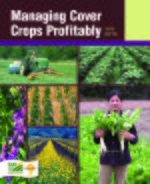
Managing Cover Crops Profitably Third Edition (en)
Number of pages: 248
Target countries: United States
Key takeaways
- Cover crops significantly enhance soil health and prevent erosion.
- The document emphasizes that cover cropping is a key strategy for building organic matter, improving soil structure, and reducing soil loss from wind and water erosion.
- Legume cover crops provide substantial nitrogen fixation, reducing fertilizer costs.
- Many legumes, such as hairy vetch and crimson clover, can produce 70–150 lbs of nitrogen per acre naturally, lowering the need for synthetic nitrogen inputs and supporting sustainable farming systems.
- Management of cover crops through timing and methods is critical for optimizing benefits.
- Proper planting, killing, and reseeding techniques—like early planting, timely termination, and mechanical or chemical controls—determine the effectiveness of cover crops in weed suppression, pest management, and nutrient cycling.
- Cover crop mixtures can improve resilience, weed suppression, and nutrient uptake, but management complexity increases.
- Blending grasses, legumes, or brassicas helps extend benefits like ground cover and pest control, yet requires careful planning of seeding rates, timing, and termination for optimal performance.
- Specific cover crops, such as rye, wheat, and oats, are adaptable to diverse climates and rotations, contributing to long-term sustainability.
- The document details how these crops can be integrated into crop rotations for soil protection, nitrogen scavenging, and weed suppression across different regions, including the Midwest, South, and West.
- Testing cover crops on-farm is a practical approach to adapt strategies to local conditions.
- Small-scale on-farm trials, careful observation, and record-keeping help farmers identify which species and management practices best fit their specific soils, climate, and cropping systems.
- Advances like mechanical rollers and targeted management improve integration of cover crops into no-till systems.
- Innovations such as roller-crimpers provide chemical-free methods for terminating cover crops, enabling conservation tillage and reducing reliance on herbicides while maintaining weed suppression and soil health.
Sources
- Managing Cover Crops Profitably Third Edition - 2007-06-01 - https://www.sare.org/wp-content/uploads/Managing-Cover-Crops-Profitably.pdf
