
Joseph Josue Farm
Market gardening, agroecological fertility management
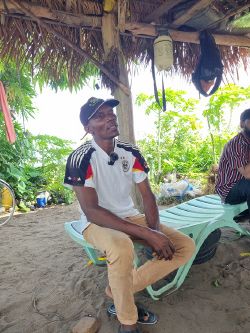
Joseph Josue
Context
- Farmer's name : Joseph Josue
- Farm name : Joseph Josue's Farm
- Location : Semé Kpodji, Benin
- Date of installation : 2010
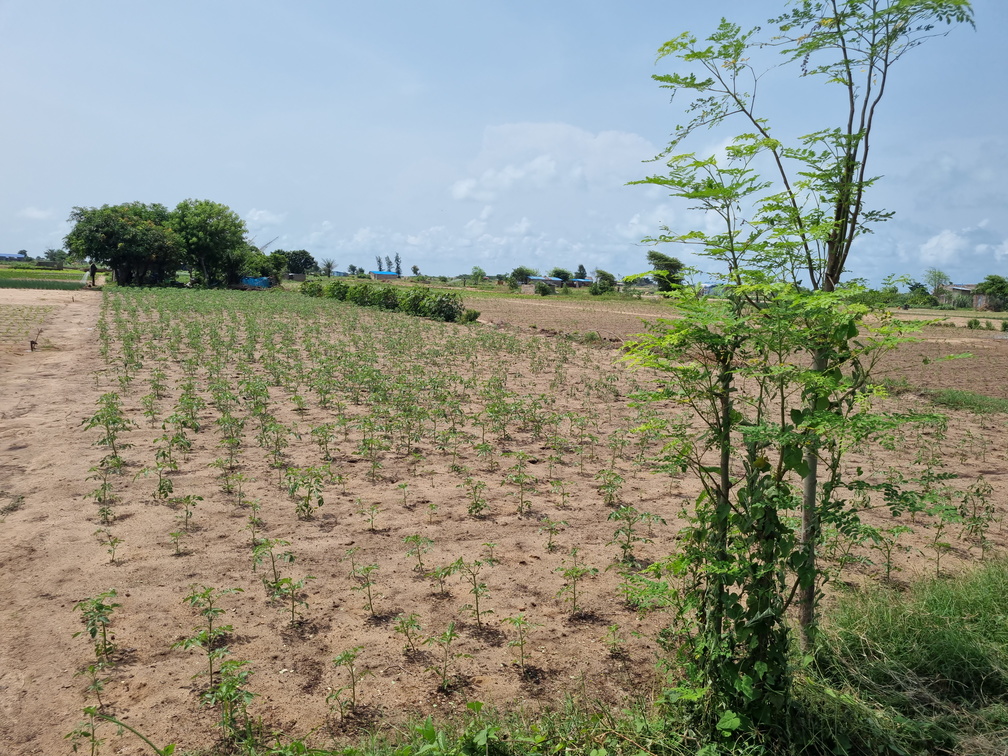
- Cultivated area : approximately 0.75 ha
- Soil texture : Sandy (Market gardening plain 100 m from the sea)
- Number of people working on the farm (FTE) : 5 permanent including Joseph, workers and people who want to learn. There are also temporary workers and interns who come regularly. His children sometimes help him.
- Climate : Semé Kpodji has a savanna climate with dry winter (Aw) according to the Köppen-Geiger classification. Semé Kpodji is an area with significant rainfall. Even during the driest month, it rains a lot. Over the year, the average temperature in Semé Kpodji is 27.4°C and the average precipitation is 1217.1 mm.
- Studies/training/life path :
- Joseph started practicing organic farming before meeting Mr. Deguénon Edgar (coordinator of the NGO Hortitechs Development, linked to SPG certification. His organization supports the Association for the Maintenance of Peasant Agriculture (AMAP-BENIN))
- He received training in organic farming and SPG (Participatory Guarantee System) from Mr. Deguénon Edgar as well as training on homemade biopesticides and Bokashi production.
- Within the Safe Veg project, experiments on his farm are implemented with support from CIRAD agronomists to limit the impact of root-knot nematodes and Ralstonia on certain crops (Tomatoes, Peppers, Amaranth, etc.). He also learned to select and reproduce certain seeds (yellow chili, demon chili, watermelon, melon) which reduced his production costs and allowed greater autonomy of the farm for production.
Motivations and objectives
- Interest in agroecology : Joseph is an organic vegetable grower and has practiced organic farming for about 14-15 years. His farm is organic certified and undergoes annual inspections via the SPG (Participatory Guarantee System). He makes his own compost (in addition to purchases), organic pesticides (based on chili and herbs), and natural fertilizers like Ryaka (based on pineapple, orange, and coconut juice). He integrates Crotalaria in his rotations to correct the soil and manage nematodes and Ralstonia.
- Goal / future projects : Not owning his land (which belongs to the Beninese state), Joseph wishes to buy land elsewhere to start new productions, in case the State asks him to leave the current domain. He plans to cultivate Crotalaria over his entire field and wants to continue growing stevia. He plans to restart the farmers' market where he sold his products in Fidjrossè, one of the central neighborhoods of the city of Cotonou.
Agronomic aspect
Plant productions
- Market gardening and food crops : Tomatoes, cucumbers, carrots, parsley, fenugreek, zata, chili pepper (yellow, demon), mint (red, green, peppermint), turmeric, chayote, goma, cabbage/soma, amaranth, radish, turnips, basil, rosemary, thyme, rockery, stevia, watermelon, melon (seeds used for production). Maize is mentioned as a potential crop to associate with Crotalaria.
- Fruit trees : Papayas (for customers), Moringa, mango tree, the State planted coconut trees on the domain.
Agricultural practices
Fertility management
- Compost: both homemade and purchased. Composting of animal manure bought from poultry, cattle, and sheep before application on plots.
- Bokashi: Production and use
- Ryaka: Production and application of this liquid fertilizer based on pineapple, orange, and coconut juice, which stimulates plant growth.
- Crotalaria Juncea (legume): as a plant to correct the soil and improve the land.
Pest management
- Natural treatments: uses products like BioBit and Top Bio but they remain very expensive for his farm, so he favors producing biopesticides from chili and other herbs.
- Decision rule : prevention is crucial. Do not wait until crops are attacked. On tomatoes, he sprays twice every three days. For other crops, less frequently (chayote for example is more resistant to pest attacks).
- Main pests : nematodes (on carrots, tomatoes, chili), mites (on cucumbers, tomatoes, chili), and fungi (especially on turnips). Ralstonia on solanaceae and amaranth.
- Losses : necessity to sell at conventional prices if products do not sell at organic prices to avoid loss by rot.
Soil work
Use of brush cutters and other tools for weeding and hoeing. Removal of roots and preparation of beds is done with hoe and by hand. Each planting bed is worked deeply (minimum 20 cm) with a hoe before cultivation.
Strategies facing constraints
- Difficulty selling organic products due to prices considered too high by consumers compared to conventional products. He is sometimes forced to sell his products at conventional market prices to avoid waste.
- Market fluctuations make production planning difficult.
- Difficulty obtaining certain organic inputs, which pushed him to make his own (Ryaka, Bokashi). Autonomy in producing biopesticides and seeds reduces dependence on the market and its fluctuations. In recent years, fertilizer prices have greatly increased in Benin and autonomy helps reduce production costs.
- Threat of having to leave the State domain pushes him to plan to buy his own land to secure his activity. This is the case for most market gardeners in the Semé Kpodji plain. The lands were made available but many are planted with coconut trees; when the coconuts reach production age, it is likely the State will reclaim these plots.
Water system
- Uses a gas pump for irrigation, powered by a borehole.
- A gas bottle costs 10,000 francs. He uses a minimum of 4 bottles per month in the dry season, but consumption decreases in the rainy season.
- Watering is more economical in gas when several people water simultaneously using a connector.
Social aspect
Satisfactions/dissatisfactions
- Workload: The workload on Joseph Josue's farm is particularly high, due to the diversity of crops, choice of manual agroecological practices, and autonomy sought on inputs. Soil work is entirely done by hand or hoe, with particular care in preparing beds to 20 cm depth. Watering, although optimized with a gas pump and connectors, requires constant mobilization in the dry season. Homemade production of compost, Bokashi, biopesticides, and Ryaka represents additional time investment, as does seed selection and reproduction. Joseph is supported by three permanent workers, interns, apprentices, and sometimes his own children, but daily management remains demanding. Coordination of crops, preventive treatments, harvesting, and direct marketing on different channels add to this work intensity, making his schedule particularly full all year.
- Economic:
- Salary: After deduction of charges and expenses for workers and products, the net annual income for him and his family is about 1 million to 1.5 million CFA francs.
- Dissatisfactions: Selling organic products is complicated because people are not willing to pay the normal price. He is often forced to sell at conventional prices to avoid loss. The price difference between organic and conventional is minimal (600 to 1000 francs). The market is very fluctuating, making sales forecasting difficult.
- Social: He sells to an organic producers' cooperative. He used to sell at a farmers' market in Fidji Rose with the association Jardins de l'espoir, but this activity is currently paused and being reactivated. He has street vendors, the “good ladies,” and customers who know organic products and come directly to buy on his farm. He trains interns and works with workers and his family.
- Living environment: The farm is located on State land. Joseph is uncertain about the duration of his occupation and plans to buy his own land for security.
Environment
- The farm is organic certified and uses agroecological practices for 14-15 years.
- He uses fertility and pest management techniques that respect the environment.
- Certified SPG with frequent controls on the application and use of pesticides and other synthetic products.
Technical support/Aids
- Support and training by Mr. Deguénon Edgar.
- Help from the Safe Veg project for setting up experimental plots and strengthening soil management/correction capacities, as well as for seed conservation and production.
- Pays an annual fee of 6000 francs to the cooperative. He also pays certification fees annually.
Cooperation with other farmers
- He cooperates with a cooperative for selling his products.
- Neighbors use chemical products but also face pest problems, notably fungi on turnips. He tries to convince other farmers to switch to organic farming by demonstrating results on his farm, sharing his techniques and methods. However, difficulty in marketing pesticide-free products locally slows adoption of these practices by other farmers.
Economic aspect
Land
The land is State property made available to Joseph, without direct rent. Joseph pays an annual fee of 6000 francs to the cooperative for office, electricity, and secretariat. Occasional contributions are organized for common work if needed.
Equipment
- 3 Brush cutters: 170,000 francs, 120,000 francs, and 130,000 francs = 470,000 FCFA
- Tools for manual work: Hoe, rake, machete, etc.
- Irrigation hoses: Replaced every two and a half years approximately, especially connectors.
Expenses (estimated annual)
- Purchased compost : About 50 to 70 bags per year, a 50 kg bag costs 3500 francs for cooperative members. (Between 175,000 and 245,000 francs per year).
- Animal manure (poultry, cattle, sheep) : About 800,000 to 1 million francs per year.
- Workers' salaries : About 1 million francs per year for three permanent workers (each earns 300-350 kFCFA per year). Interns are unpaid but receive money for food.
- Gas for irrigation pump : Minimum 4 bottles per month (10,000 francs per bottle) in dry season, at least 480,000 francs per year if irrigation is frequent.
- Fuel for market transport: About 4 liters per month (500-550 francs per liter), about 26,400 francs per year.
- Seeds : Maximum cost of 200,000 francs per year, reduced thanks to own seed production.
- Cooperative fee : 6000 francs per year.
- Certification and control fees : Paid annually, about 7000 FCFA.
Income
- Annual turnover : Can reach 5 million CFA francs, but often varies between 2 million and 2.5 million CFA francs.
- Net income for the farmer : After deduction of all expenses (products, workers, food), about 1 million to 1.5 million CFA francs remain for Joseph and his family.
Commercial strategy / outlets
- Sale to a cooperative.
- Sale at a farmers' market (currently temporarily stopped but being relaunched).
- Direct sale to street vendors and customers who know organic products.
- Difficulty selling at organic prices, sometimes forced to sell at conventional market prices to avoid losses.
- The market is very fluctuating and unpredictable.
Farmer's advice
Joseph Josue reveals that his resilience and proactive approach are very important. He emphasizes the importance of prevention in pest management for organic farming. He also highlights the necessity of innovation and autonomy by making his own products (compost, Ryaka, organic pesticides) in face of supply difficulties and high costs. Finally, he highlights the economic challenges related to the valorization of organic products and the need to adapt to market realities to ensure the farm's survival.
Photo gallery
Sources
Interview with Joseph Josue conducted in 2025.
