

Hedge, Tree, and Shrub Management to Promote Biodiversity

Among the habitat improvements favorable to beneficial organisms and biodiversity possible, there is the establishment of hedges and bushes.
Description

A hedge favorable to biodiversity is a hedge heterogeneous in its composition and structure.
The composition favorable to biodiversity depends on its floristic richness (flowering spread throughout the year) and fruitfulness (winter food resource for birds) as well as the diversity of its layers: trees, shrubs, vines, and grassy bank at the hedge base[1]. The latter is fundamental to the survival of amphibians and reptiles in cultivated fields[2].
The diversity of layers also provides nesting sites for all birds dependent on hedges (warblers, thrushes…).
It is preferable to plant hedges fairly wide (double or triple rows) to constitute an effective refuge for terrestrial wildlife. Maintaining a grassy strip at the hedge base is also wise to enhance attractiveness for beneficial organisms, but also to facilitate access to the hedge by the farmer.
The countryside hedge

The countryside hedge is a habitat in balance, with a natural appearance but contained and artificially delimited. It requires regular maintenance to prevent the spread of vegetation that would lead to its widening. Some species, disliked or little known, are absolutely necessary for the countryside hedge:
- The thorny ones: blackthorn and hawthorn.
- The little-known yet extremely widespread: wayfaring tree, privet, spindle tree, dogwood.
- The vines: bramble, honeysuckle, ivy, old man's beard, hop, rose
- The herbaceous plants.
Its morphologies

Depending on the associations of shrubs and trees, the diversity of ages and sizes of the plants composing it, but especially depending on the owner's will and the frequency of interventions, the countryside hedge presents a great diversity of morphologies.
- A low hedge (< 2 meters) can only be obtained by very regular and frequent maintenance pruning (at least once a year).
- For wavy, medium or tall hedges, there is no height limit, only a front pruning is done to obtain lateral containment, keeping a minimum width of 1.5 to 2 meters, necessary for the plants to thrive. The hedge must maintain a volume necessary and sufficient for its balance and longevity. The plants composing it need to develop their branches and foliage to flower, fruit, and reproduce. If a hedge is diverse, its self-regeneration capacity is significant and will allow it to last over time. This diversity is a guarantee of balance, mechanical stability, climatic and health security.
Its role
The countryside hedge is an essential component of our landscapes, in which it occupies a singular place:
- It partitions, separates, and fragments space. This is the barrier effect or fencing effect.
- It connects, weaves, links isolated places without its presence. It allows the circulation and mixing of flora and wildlife. This is the corridor effect.
- Both an open and bright habitat, and closed and shaded, it is an ecotone sheltering a wide variety of animal and plant species. This is the edge effect.
A countryside hedge:
- Has a footprint of at least 1.5 m wide.
- Is bordered on both sides by a grassy margin at least 50 cm wide.
It features:
- A high density and diversity of plants.
- A well filled and compact low cover.
- A sufficient volume (height/width ratio) so it can live, fulfill its roles, and also renew naturally.
Expert opinion
"The diversity of layers is very favorable to beneficial organisms because food resources and shelters are multiple for insects." Véronique Tosser, Arvalis Plant Institute.
Successive land consolidations since the 1950s have encouraged massive hedge removal. This is true in bocage areas. However, in large crop or open field zones, hedges were little or not present. In these spaces, it is mainly the edges that have been reduced. These edges are essential for the biodiversity of plains[3].
For more information on this topic, see the page Promoting biodiversity by organizing parcel layout to increase the edge effect.
Planting
For a new hedge or bush planting, it is relevant to be inspired by the composition of old hedges already present in the area to select species adapted to your farm. Here is a non-exhaustive indicative list of species that can be used for new planting[4]:

Conversely, some species should be avoided in arable crops:
- Conifers because they are less interesting for crop beneficial organisms and some are even host plants to a family of harmful noctuids: Agrotis.
- Prunus species (cherry tree, bird cherry) because they host the bird cherry aphid (Rhopalosiphum padi). This aphid can attack cereal crops and maize.
- The plum tree because it is the primary host of the green peach aphid (Myzus persicae) and can attack oilseed rape.
To be supported in a planting project, it is possible to contact a local specialized structure.
Planting advice
To allow optimal development of young plants, it is important to:
- Protect them from wildlife, such as deer or rabbit.
- Install mulching to limit competition with the local flora.
Cost
Example of costs related to hedge establishment replacing productive land: 100m hedge on 1 row amortized over 25 years (100 plants per row): 535 to 710 euros (including 260 euros labor) and maintenance: 10 to 13 euros per year. The loss of income (replacement of productive land) varies according to the hedge width. It is estimated between a few euros to 50 euros per 100 linear meters. These costs are partly offset by products that can be derived from hedges (firewood, timber, fruits, etc.). Financial aids are sometimes available.
Further reading
To choose species favorable to beneficial organisms best suited to your farm, you can use the Auxil'Haie tool.
Different stages of hedge evolution
1. Spontaneous development
Most hedges found along fields, ditches, rivers, paths... come from spontaneous vegetation development. It is thus possible to promote the installation of a hedge without planting. The recruits can be pioneer plants that create favorable conditions for the development of other more varied plants. Bramble, blackthorn, broom, gorse... form pioneer hedges, "oak cradles", which must be managed and maintained.
2. Mature and diversified
When it offers a diversity of species (7 to 15) and age classes, the hedge is considered a habitat in balance that only requires regular maintenance. When this maintenance is not ensured for 4 to 10 years, the hedge tends to thicken and spread. It must be re-delimited, reshaped to regain its form and balance. This is called rehabilitation.
3. Degraded
Due to lack of maintenance or over-maintenance, some hedges lose their balance. They then show regressing vegetation, with health problems and a loss of diversity. The plants composing it no longer renew, they are senescent and wither all at once. It must then be regenerated.
4. Young planted hedge
Planting anticipates the natural establishment of a diversity of species. A layered structure is established that will self-regenerate and self-regulate. The first years require monitoring (refilling, formative pruning, possible weeding).
Hedge or bush maintenance
Pruning aims to limit the hedge width, and sometimes height, while maintaining a sufficient volume (height/width ratio). Regular but moderate interventions are necessary to contain and delimit the hedge. Depending on the situation and the site's potential, maintenance pruning should occur every 2 to 4 years. Thus, if regularly maintained, the work is light, less traumatic for the plants, and has a much lower overall cost.
Intervention period

Certain periods of the year are not suitable for maintenance operations due to the biological sensitivity of the hedge. The hedge is indeed an extremely rich and varied habitat that must be respected. Interventions should be avoided during nesting, flowering, or when pruning represents a risk of weakening the woody plants.
Some advice
- Inappropriate mechanical pruning, too close to the trunk or too frequent weakens woody plants and causes growth of brambles and blackthorns which harm the hedge's balance. Holes may appear, and the hedge degrades.
- Do not maintain all hedges at the same height and in the same years. Some bird species prefer low and dense hedges like the Blackcap. It nests about 1 m above ground. Other species prefer taller hedges with a clear base (umbrella-type hedge) like the European goldfinch. It nests in tree forks between 2 and 10 m high.
- Develop wide hedges because they host a richer and more abundant bird and insect fauna[5].
- Maintain a grassy margin at the base.
- Also avoid a homogeneity of treatment over a territory which leads to standardization with only one type of hedge.
- For riparian forests, the most suitable intervention period is autumn-winter. It is not recommended to intervene between March and September.
-
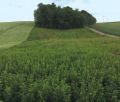
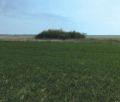 Bushes or copses in a field corner, these elements are more functional when accompanied by grassy banks.
 -


Regular maintenance of linear features in good condition
This involves regular pruning allowing control in width, and sometimes height, of linear features located on roadside, field, or property edges. Maintenance must be done so that the cut is clean and vegetation regrowth is possible. Appropriate tools must be used.
When large branches are present, a preliminary pass with a pole pruner can be considered to remove them. 2 or 3 passes are made depending on the tool width and desired height.
Interventions occur:
- Every 1 to 2 years on roadsides.
- Every 2 to 4 years in other situations.
Machinery: agricultural tractor with hydraulic arm
Flail mower, shredder or flail
This is the most common tool. Unfortunately, its use is not always the most appropriate because its flail rotors shred the vegetation. To limit potential damage, it is preferable to use Y-profile blades (less aggressive) and to reverse the tool's rotation direction against the tractor's forward direction. Also avoid pressing the tool against tree trunks. Generally, flail mower maintenance does not produce significant debris, and there is no branch collection. The "residues" can however be shredded on the ground.
Recommended uses:
- For hedges pruned every year.
- To shred wood pruned by another tool, avoiding collection.
- To shred hedge bases and herbaceous plants on embankments.
Some data:
- Maximum branch diameter: 2 cm.
- Working width: 1.20 m.
- Forward speed: 2 to 3 km/h.
- Recommended frequency: annual.
Knife bar mower
Like the flail mower, the knife bar has a very small cutting diameter and is recommended for hedges pruned every year or every 2 years. Its working width being larger (up to 2.5 meters), it is preferred to the flail mower for tall hedges. It also has the advantage of making cleaner cuts and not leaning on the hedge, which minimizes the risk of damage. This tool requires very regular sharpening.
Some data:
- Max branch diameter: 2 to 3 cm
- Working width: 1.70 m to 2.5 m
- Forward speed: 1 to 2.5 km/h
- Pruning frequency: annual
Hedge trimmer
This tool, mainly used in landscaping, is very precise and fast for regular and frequent maintenance. It avoids any injury and allows very good healing. This tool still requires adaptation by manufacturers before it can be used in agricultural situations.
Some data:
- Maximum branch diameter: 3 cm.
- Working width and forward speed variable.
- Recommended pruning frequency: annual
Rehabilitation of neglected linear features
Principle
This involves restoring to size for linear features not maintained for 4 to 10 years. The use of the knife bar mower is undoubtedly the most suitable and economical solution (speed of execution).

First step: sizing
Opening the worksite by pre-pruning and delimiting the hedge in thickness (delineation), slightly beyond the size desired at the end. This first intervention is done:
- Either with a cutting bar (or pruner), if branch diameter is less than 8 cm, 2 to 3 passes.
- Or with a saw knife bar, for branches between 5 and 20 cm diameter, 1 pass + 1 to 2 pruner passes.

Second step: base shredding
The pruning debris is significant, it must be shredded with a rotor flail mower: 2 or 3 passes are generally necessary depending on the amount of plant debris. Chipping/exporting residues can be considered.

Third step: 2nd base shredding
One year after the sizing pruning, the base of the linear feature must be shredded again to promote grassing of the margin.
Machinery
Cutting bar or pruner
Adaptable on all flail mower arms, the cutting bar works like a pruner (a moving blade and a counter blade) ensuring clean cuts and respectful work on trees on branches up to 8 cm diameter. Branch collection or shredding on the ground must be planned after pruning.
Some data:
- Maximum branch diameter: 7 to 8 cm.
- Working width: 2.30 m.
- Forward speed: 1.5 to 2.5 km/h in maintenance and 0.6 to 1.3 km/h in catch-up.
- Recommended pruning frequency: annual or every 2 years depending on plant type.
Saw knife bar
The circular saws of the knife bar have a cutting diameter up to 20 cm. They allow clean cuts on old subjects. This tool is ideal for long neglected hedges, as well as for edges and wooded strips. Intervention is preferable in winter, when the wood is hard and offers good resistance to forward movement.
Advantages:
- Interventions can be less frequent, every 2 to 10 years depending on species.
- Reduced cost due to less frequent intervention and wider cutting width.
- On the same knife bar, it is possible to adapt knife discs allowing cutting of smaller diameter branches.
Some data:
- Maximum branch diameter: 20 cm.
- Working width: 1.70 m to 2.47 m (5 saws of 600 mm).
- Forward speed: 1.5 to 2.3 km/h in maintenance and 0.6 to 1.3 km/h in catch-up.
- Recommended pruning frequency: every 4 to 6 years (saws).
Restoration and regeneration of degraded linear features
Principle
Faced with a degraded linear feature, the reflex is often to clear and replant, even before considering improving what already exists. The objective here is to promote rejuvenation, a natural regeneration of degraded plants, through stump shoots and suckering.
- When a hedge is too old, it tends to thin out at the base. It is then useless to prune it higher; it can only regrow if it sprouts from new shoots. For this, a clear cut of the linear feature is carried out, a total coppicing of the plants, except for the most promising young specimens which must be protected and then pruned (pollarding). These subjects, previously competing in their growth, will be able to develop more easily.
- When the vegetation is damaged by overly severe maintenance, it is sometimes also preferable to coppice so that the regrowth is healthy. Sometimes it will be enough to just let the hedge widen or to replant some bushes or shrubs.
Technical itinerary
First step: year n
- Clear cut of degraded individuals: exposing the stumps and soil.
- Selection and possible treatment of promising subjects (young trees to be trained or coppiced).
- Shredding of the edges to reform a lateral grassy margin.
- Enrichment planting if needed.
Second step: year n+1
- Monitoring of shoots and selected young subjects and possibly coppicing and pruning of new shoots. Encourage the growth of any seedlings.
- Control of pioneer development (brambles, scrub...): selective clearing around young subjects.
- Second shredding of the edges to reform a grassy margin.
Third step: year n+2 and beyond
From the third year following the clear cut, it will be necessary to implement:
- A systematic monitoring of shoots and young subjects.
- Regular selective clearing to contain bramble thickets.
- Maintenance pruning on the front and, if necessary, at the top.
One year after the size adjustment pruning, it is necessary to shred the base of the linear feature again to promote grass cover of the margin.
Machinery
Several tools will need to be used:
- Chainsaw.
- Laminar saw in certain places.
- Brushcutter with rotors.
- Wood chipper (possibly).
Linear coppices and high forests
Definition
Linear coppice
"One or two layers, composed of trees or large shrubs managed as stool coppice. One layer if the hedge only consists of this coppice, two layers if shrubby bushes cover the base" (Soltner).
Linear high forests
"One or two layers, composed of trees managed as regularly spaced high stems. One layer if the base is bare of shrubs, two layers otherwise" (Soltner).
Management of linear coppices
3 techniques:
- Regular clear cutting.
- Progressive transformation of the coppice into coppice-with-standards by the pollarding technique.
- Apply these two methods to low hedges composed of interesting trees; by stopping regular pruning, they can again become perches.
Maintenance and restoration of linear high forests
- Progressive pruning: facilitates passage of machinery and adds value to the wood.
- Intercalary filling if a windbreak effect is desired.
- Renovation of the curtain: depends on the extent of gaps, whether to replace some missing trees or to replant the high forest.
Hedge label

The label is a certification scheme for hedge management practices and wood distribution channels from bocage.
Issue: to stem bocage erosion in France by supporting the development of sustainable channels. When hedges are in good ecological condition, they provide many services in terms of biodiversity, biomass, water, microclimate, and carbon. The annual disappearance of 11,500 km of hedges in France is a direct cause of biodiversity collapse and the amplification of climate disasters visible in our territories.
Limit
Regarding hedges, the French CAP regulation (BCAE 7) strictly limits their possibilities for relocation. This French over-transposition is the main obstacle to new plantings. For biodiversity, it is strongly recommended to ensure the maintenance and conservation of old hedges with high ecological and landscape value, such as thick multi-layered hedges with diverse composition, hedges composed of remarkable species (elm, linden, etc.) or hedges on embankments.
For more information.
Appendices
Est complémentaire des leviers
- Practice agroforestry
- Practice vitiforestry
- Carry out agroforestry developments
- Pollarding
- Plant hedges
Sources
- The vademecum, 2022, Arbre et paysage 32
- Cereal growers and biodiversity: A synergy to reaffirm - The technical portal of the OFB
- Technical sheet, GECO, Implanter des haies
- ↑ Pasquet G.; 2014. La chasse verte, Montbel, 296p.
- ↑ Boissinot A. et al; 2013. Influence of hedgerow structure on amphibians and reptiles, A multi-scale approach, Faune sauvage, no. 301, p41-48.
- ↑ Omnès F.; 2017. Parcel layout and wildlife: towards agro-ecological land management?, Faune sauvage, p 66-73.
- ↑ Source: Villenave-Chasset J. (2019) Functional biodiversity, Protection of crops and wild beneficial organisms. Edition la France Agricole, 148p
- ↑ Chevallier N. et al.; 2013. Does hedge maintenance impact the bird community of the Avesnois bocage? Faune Sauvage, No. 299.