
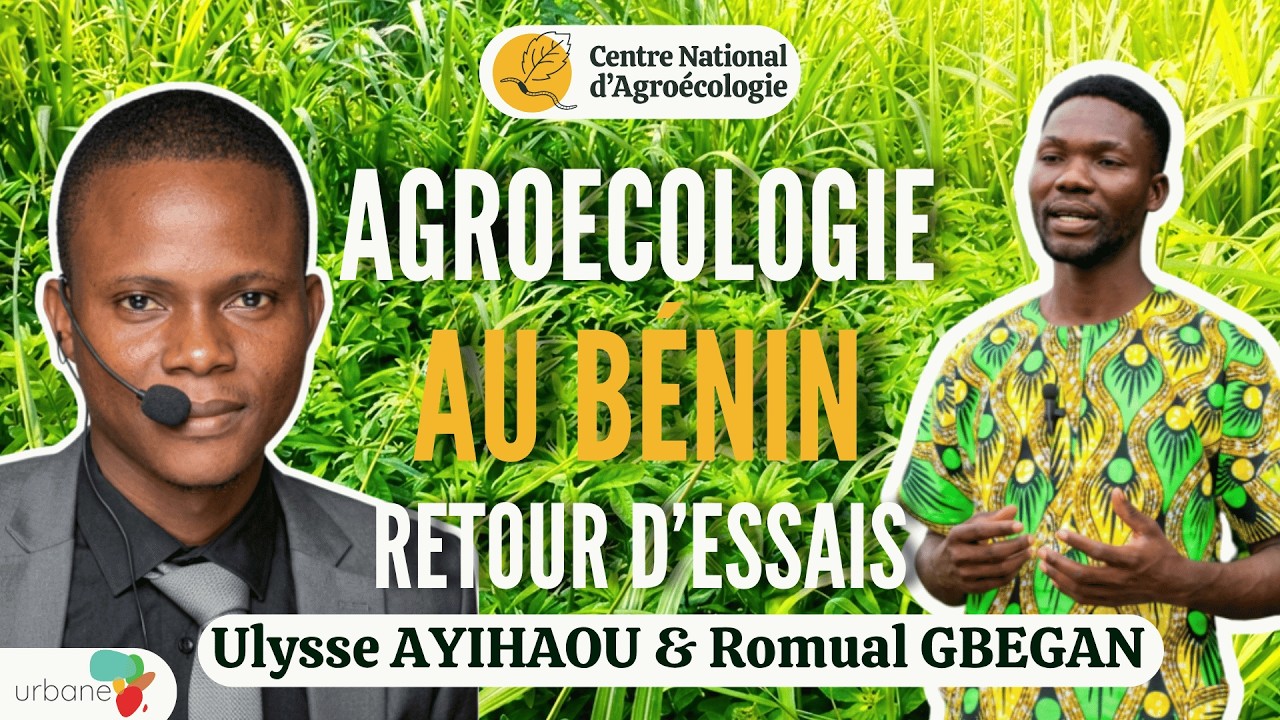
AGROECOLOGY IN BENIN - part 1
00:00 - Introduction and project context in Benin
05:30 - Presentation of stakeholders and study areas
12:15 - Methodology of agroecological trials
22:40 - Results of the first field experiments
35:10 - Soil analysis and local biodiversity
48:00 - Testimonials and exchanges with producers
54:25 - Conclusion and perspectives for agroecology
This video was produced by the National Center for Agroecology (CNA) https://centre-national-agroecologie.fr/ as part of the URBANE project https://urbane-project.eu/, funded by the European Union.
The opinions expressed are solely those of the authors and do not necessarily reflect the position of the European Union or the Research Executive Agency (REA)
This video was made as part of the URBANE project co-funded by the European Union. Website: https://urbane-project.eu/
The opinions expressed are those of the authors only and do not necessarily reflect the views of the European Union or the European Research Executive Agency (REA)
00:00 - Introduction and project context in Benin
05:30 - Presentation of stakeholders and study areas
12:15 - Methodology of agroecological trials
22:40 - Results of initial field experiments
35:10 - Soil analysis and local biodiversity
48:00 - Testimonials and exchanges with producers
54:25 - Conclusion and perspectives for agroecology
This video was produced by the National Center for Agroecology (CNA) https://centre-national-agroecologie.fr/ as part of the URBANE project https://urbane-project.eu/, funded by the European Union.
The opinions expressed are solely those of the authors and do not necessarily reflect the position of the European Union or the Research Executive Agency (REA)
This video was made as part of the URBANE project co-funded by the European Union. Website: https://urbane-project.eu/
The opinions expressed are those of the authors only and do not necessarily reflect the views of the European Union or the European Research Executive Agency (REA)
Agroecology in Benin - part 1
This webinar, organized within the framework of the Urban and SafeVeg projects, is dedicated to the agroecological transition of peri-urban agriculture in West Africa. The Urban project is deployed in six countries (Ghana, Nigeria, Burkina Faso, Senegal, Morocco, and Benin) with the objective of studying the links between agricultural practices, the health of ecosystems, animals, and humans, while promoting sustainable technologies.
Agroecological trials: fertilization and symbiosis
Ulysse Ayihaou, a microbiology PhD student at the University of Abomey-Calavi, details the two research components conducted in Benin:
Cover crop trials
The objective is to replace chemical fertilizers with cover crops (legumes and cereals) to enrich the soil with nitrogen and biomass. Three modalities were tested, compared to a control plot:
- Maize + cowpea
- Maize + peanut
- Sorghum + cowpea
The results show that the sorghum + cowpea combination offers the best biomass and nitrogen yield, reaching about 30 tons per hectare for the subsequent tomato crop, thus validating the effectiveness of these practices on different soil types.
Symbiotic trials
These trials use microorganisms (prebiotics and probiotics, notably Bacillus subtilis) to naturally fertilize the soils. Treatments include:
- Prebiotic alone.
- Probiotic alone.
- Symbiotic (combination of both).
- A positive control (commercial product).
- A negative control (conventional practices).
Results indicate that the symbiotic treatment promotes faster plant growth and a significant increase in productivity, with a theoretical projection reaching 50 tons per hectare.
Testimony of a producer: Romuald Gbegan
Romuald Gbegan, producer and manager of Agrisaveur farm in Akassato, shares his experience transitioning to agroecology over the past three years.
- Paradigm shift: After abandoning chemical fertilizers (NPK, urea) that deplete the soil and pose health risks, he integrated agroecological methods. He emphasizes the importance of using local varieties, such as purple maize (rich in anthocyanins), combined with legumes to nourish the soil.
- Managing constraints: Bird pressure on cowpea crops remains a major challenge in the off-season. However, Romuald explains that this difficulty can be managed by occasional recruitment of surveillance personnel, a cost largely offset by increased yields and the quality of the final product.
- Ethical vision: For Romuald, agroecology is a moral responsibility: "We eat to live and not to die." He urges other producers to abandon chemical products to preserve consumer health and the sustainable fertility of the land.
Perspectives and conclusion
The participants agree that the success of agroecology relies on crop diversification and a systemic approach. Research, notably with the support of CIRAD, now focuses on:
- Transferring laboratory techniques to local production of symbiotic solutions to avoid dependence on imported inputs.
- Optimizing the cropping calendar to ensure consistent economic profitability.
- Creating solid economic evidence (costs/products) to convince more farmers to join this agroecological transition dynamic.
