


Nitrogen is one of the main nutrients in terms of quantity, playing a key role in the general metabolism of plants. Nitrogen is essential for crops to enable strong vegetative growth and to synthesize chlorophyll which provides energy to the plant. It is also crucial in the formation of proteins. A blockage of assimilation, especially at the end of the cycle during dry periods, can quickly lead to a decrease in yield and production quality.
Nitrogen Hunger
In the particular case of nitrogen hunger, nitrogen is not lacking in the soil but it is not available to the plant. The "nitrogen hunger" phenomenon manifests as weakening of plants, growth delay and/or leaf discoloration. It occurs when the soil is too rich in carbon compared to nitrogen, which can be caused by certain inputs of organic matter (straw or RCW for example).
Deficiency Identification: Symptoms
Nitrogen deficiency can manifest at all stages of growth and development of the plant.
The first signs of nitrogen deficiency generally appear on the old leaves. These yellow progressively as nitrogen moves to younger, more productive leaves. This yellowing, for corn, occurs along the central vein, in a V shape, with the point towards the stem. The plants are also smaller.
In the most severe cases, the leaves eventually necrotize.
Diagnosis Confirmation
- Nitrogen nutrition diagnostic tools (Jubil, N-tester…) allow detection of nitrogen deficiencies. However, these two tools cannot be used before flowering.
- Leaf diagnosis at flowering (not very precise).
Risk Situations
Causes of insufficient nitrogen availability :
- Too low input.
- Leaching beyond root reach of part of the applied nitrogen.
- Limited rooting: competition with weeds especially grasses.
- Water deficit : nitrogen deficiency caused by soil drying.
- Sandy soils, poor in humus.
Impact on Yield
On fertilized plots, nitrogen deficiencies remain moderate and their impact on yield is low.
Consequences of Poor Balance
Excess Nitrogen
- Disfavors plant maturity;
- Causes excessive vegetative growth (lodging in cereals / decrease in sugar content in beet, etc.);
- Greater susceptibility to pests, especially attacks by piercing-sucking insects such as aphids.
Nitrogen Deficiency
- Stunted plant and vegetative organs;
- Yellowing, initially on old basal leaves (yellowing of tips then edges);
- Direct impact on yield and quality of production (e.g., protein content in wheat);
- Being a mobile element within the plant, nitrogen is transported, in case of shortage, from old leaves to young shoots. This is the opposite for symptoms related to sulfur.
Preventive Solutions Against Deficiencies
Use cover crops
Cover crops can prevent the loss of 5 to 30 N units.
- For example, for 250 plants emerged/m2: 70-80% legumes; 5% small seeds (phacelia, mustard) and grasses. A very dense cover efficiently promotes soil mineralization:
- Mineralized elements (NPK) will be fixed by this cover;
- Mineralization also concerns carbon that escapes as CO2. If a dense cover crop is in place, this CO2 remains “trapped” under the canopy where its concentration increases, to the benefit of plant productivity.
Nitrogen input by permanent cover crops (PCC) on wheat: A cover crop called “permanent” or “perennial” (PCC) remains on the plot for at least two cropping cycles, generally between 18 and 36 months. These covers are most often composed of legumes for the benefits they bring in terms of self-fertility:
- Ensure a living soil cover during intercrop without needing to reseed annually.
- Thanks to its longer duration, the perennial cover has a better impact than an intercrop cover in terms of soil structuring, biological fertility and weed competition;
- It helps overcome cover establishment issues during drought periods.
Plant Companioning (Intercropping)
The best-known example is oilseed rape intercropping: associating oilseed rape with legumes in the first part of its vegetative cycle allows benefiting from natural ecosystem services (nitrogen supply, pest control, weed management, soil fertility improvement). Oilseed rape emerges earlier and has a shorter dynamic growth phase than legumes, giving it systematically at least a week’s head start over legumes. Thus, competition risks on oilseed rape in the first phase of the cycle are limited, making the association functional. According to Terres Inovia charts, nitrogen return from companion plants is about 30 nitrogen units for oilseed rape (TERRES INOVIA, 2020).
-
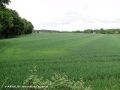 Pale green bands linked to irregular spreading.
 -
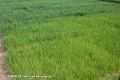 Nitrogen-deficient plot with pale green color (foreground).
 -
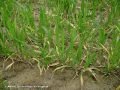 Old leaves uniformly yellowing from the tip.
 -
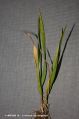 Yellowing of old leaf tips accompanied by death of the least developed tillers.


For more on managing nitrogen deficiency, see Arvalis sheets : on wheat or corn
- REDIRECTION Modèle:Afficher les stores du portail
Sources
- Overview of organic nitrogen, Agroleague
- Nitrogen and organic residual products (ORP), Agroleague
- Role of nitrogen and its effects on plant nutrition, Agroleague
- Omafra, Soil management, fertilization, nutrition of crops and cover crops : http://www.omafra.gov.on.ca/french/crops/hort/soil_fruit.htm#Nitrogen
- Accident sheet Arvalis : http://www.fiches.arvalis-infos.fr/fiche_accident/fiches_accidents.php?mode=fa&type_cul=1&type_acc=1&id_acc=56
- Dubus Gilles (April 9, 2021), "Nitrogen hunger - Causes and solutions", Le Blog du Jardinier Bio https://www.un-jardin-bio.com/faim-azote/
- "How we definitively overcame nitrogen hunger", Ferme de Cagnolle https://fermedecagnolle.fr/agronomie-et-msv/agro-ecologie/comment-on-a-vaincu-la-faim-dazote/
- "C/N Ratio", https://en.wikipedia.org/wiki/C/N_ratio?oldid=114515582
- Michonnet Jean-Luc (2015) "Hydromorphic soils and wetlands", SOLAG n°5, 06/01/2015 https://pays-de-la-loire.chambres-agriculture.fr/fileadmin/user_upload/Pays_de_la_Loire/022_Inst-Pays-de-la-loire/Listes-affichage-FE/RetD/Vegetal/Bulletins-SOLAG/Physico-chimie_du_sol/20150601_SOLAG_Sols_hydromorphes_et_zones_humides.pdf